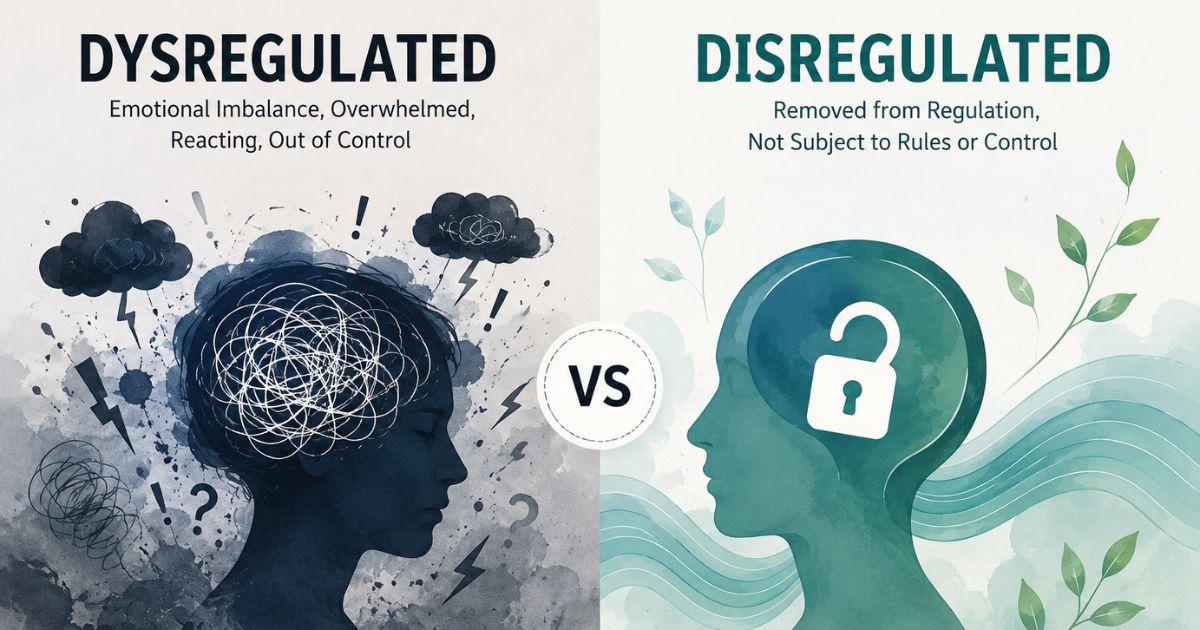
Many people use the terms ‘dysregulated’ and ‘disregulated’ without realizing their meanings. These two words are similar in sound, play different roles in describing behavior and emotional states. Understanding their differences is vital for clear communication.
Quick Answer Dysregulated vs Disregulated Explained
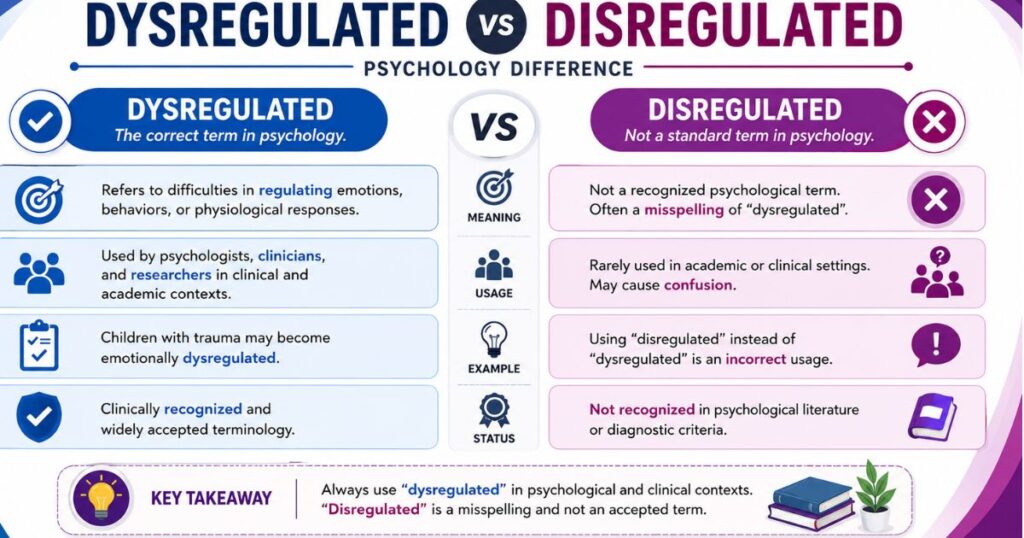
Dysregulated: An inability to manage emotions or behaviors effectively, often seen in mental health contexts.
Disregulated: Not accepted in standard usage; it’s a common misinterpretation.
Use Dysregulated when describing situations where feelings are overwhelming or uncontrolled.Avoid using disregulated.
Dysregulated Meaning: What It Really Means
Dysregulated describes a state where emotional responses or behaviors are out of balance.
This can show up in various ways, such as anxiety, sudden anger, or difficulty focusing. It’s not just about feeling bad; it’s about how these feelings disturbs daily life and relationships.
- Emotional dysregulation is often a response to trauma or stress, creating a cycle that’s tough to break.
- Individuals may struggle to find calm in chaos, leading to unpredictable reactions to everyday situations.
- Recognizing dysregulation is the first step to regaining control, support from friends, family, or professionals.
Word Breakdown
- The term “dysregulated” combines “dys-” and “regulated.”
- The prefix “dys-” points to a breakdown in normal processes.
- “Regulated” means systems that are controlled or managed.
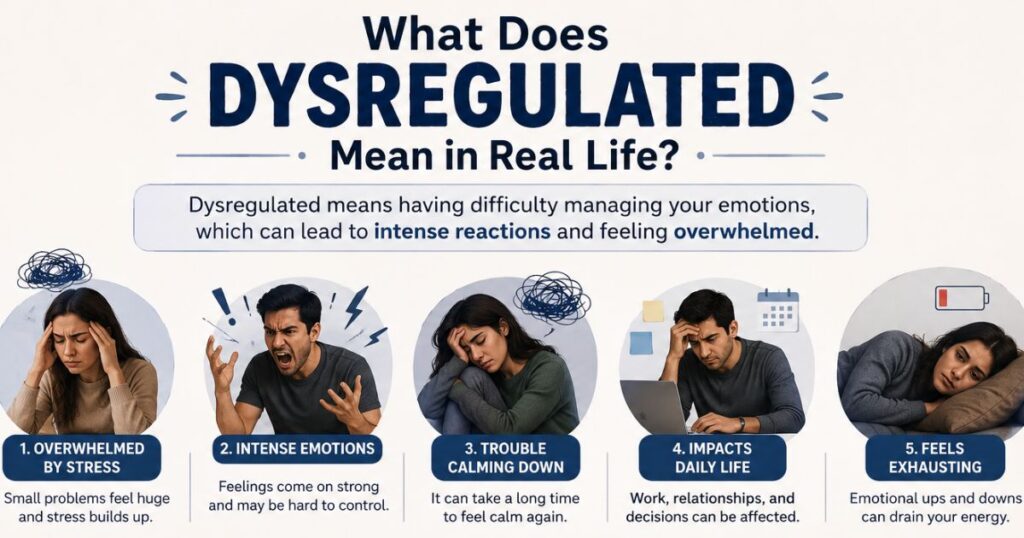
What Does Dysregulated Mean in Real Life?
Dysregulated often describes states where emotions, behaviors, or systems are out of balance.
Common Uses Across Fields
In Psychology:
- Emotional chaos: Feelings overwhelm us.
- Behavioral unpredictability: Actions become erratic.
- Coping challenges: Strategies often fail.
In Biology:
- Nervous system: Responses become erratic.
- Immune response: Defenses weaken unexpectedly.
- Hormonal imbalance: Body chemistry shifts dramatically.
In Everyday Language:
- Ups and downs: Life feels inconsistent.
- Mood swings: Happiness fades quickly.
- Stress overload: Simple tasks become daunting.
Simpe Example: A couple has frequent arguments because they can’t communicate their needs effectively.
Disregulated Meaning: Is It a Real Word?
“Disregulated” is often seen in casual conversation but isn’t an official English word.
What does disregulated mean?
Suggests lack of control.
Refers to emotional issues.
Often used in mental health.
Why people use it:
Growing mental health awareness.
Need for clearer expression.
Reflects personal struggles.
Reality:
- The reality is that although “disregulated” may feel relevant, “dysregulated” is the correct term.
- Many people still connect with “disregulated,” using it to express feelings of overwhelm or chaos.
- Language evolves, but sticking to clarity can bridge understanding.
How to pronounce Dysfunction and Disfunction:
https://www.youtube.com/watch?v=jMLQghUDyjI
https://www.youtube.com/watch?v=DWEz-LoMJgc
Dysregulated vs Disregulated Definition (Side-by-Side)
| Feature | Dysregulated | Disregulated |
| Definition | a state where normal regulation is disrupted. | considered a misspelling of “dysregulated.” |
| Correct usage | Yes | No |
| Field usage | Psychology,clinical settings and mental health | Rarely accepted |
| Writing quality | in professional contexts. | used informally |
Dysregulated and disregulated often trip people up because they are phonetic twins. The similarity in their sounds makes them easy to confuse, especially when reading.
Key Reasons Behind the Confusion
- Similar Sounding Words
- Diverse Context Usage
- Lack of Awareness
Think of It This Way
Saying disregulated instead of dysregulated is like saying ” imhappy” instead of “unhappy”.
How to Use Dysregulated vs Disregulated Correctly
The Golden Rule
Use “dysregulated” when referring to biological, emotional, or behavioral systems that have lost their normal functioning.On the other hand, “disregulated” is less commonly accepted in formal writing.
Common Sentence Structures
- “She felt dysregulated during the therapy session due to intense feelings.”
- “His dysregulated responses made communication difficult.”
Dysregulated vs Disregulated in a Sentence
Incorrect:
- “The network became disregulated after the power outage.”
- “Disregulated systems can lead to larger operational failures.”
Correct:
- “The network became dysregulated after the power outage.”
- “Dysregulated systems can lead to larger operational failures.”
You may seek help from https://forum.wordreference.com/threads/dysfunction-vs-disfunction.1450998/
Dysregulated vs Disregulated Examples (Across Contexts)
Emotional Context:
Dysregulated feelings can lead to outbursts over minor issues.
Medical Context:
- Dysregulated bodily responses could manifest as panic attacks in stressful situations.
- A patient with dysregulated blood sugar might experience sudden mood swings due to fluctuating glucose levels.
Everyday Context:
Dysregulated behavior may look like frequently snapping at friends For example, someone might call friends late at night, unaware of how their actions affect those around them, highlighting a disregulated sense of responsibility.
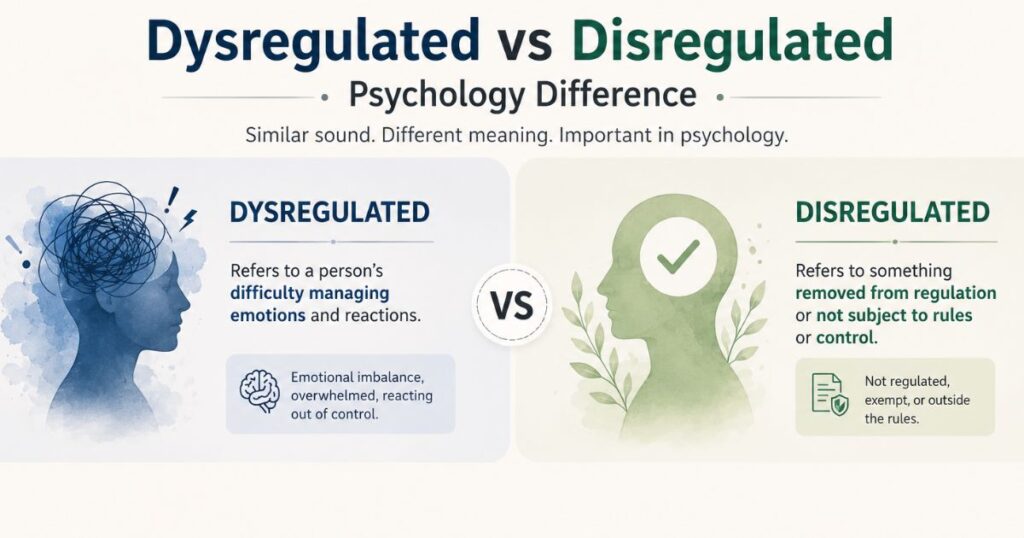
Dysregulated vs Disregulated Psychology Difference
Dysregulated psychology refers to a state where an individual’s emotional responses are inconsistently managed, often leading to intense feelings.
Emotional Dysregulation Meaning:
- Difficulty managing emotions effectively and consistently.
- Can lead to impulsive behaviors and overwhelming feelings.
Signs of Emotional Dysregulation:
- Intense mood swings that feel unmanageable.
- Difficulty calming down after an emotional outburst.
- Overreacting to minor stressors.
- Feeling numb or disconnected at times.
Mental Health Conditions Linked to Dysregulation:
- Borderline Personality Disorder (BPD)
- Attention-Deficit/Hyperactivity Disorder (ADHD)
- Post-Traumatic Stress Disorder (PTSD)
Real-Life Scenario:
- A student feels crushed after receiving a B on a test. Instead of processing the disappointment, they lash out at friends or withdraw entirely, reflecting a struggle with emotional dysregulation.
Related articles you may find helpful: Implicit vs complicit
Dysregulated Nervous System What’s Happening Inside Your Body
Dysregulation of the nervous system is like being stuck in a traffic jam — signals are muddled, and your body struggles to respond appropriately. When this happens, the balance between the sympathetic (fight or flight) and parasympathetic (rest and digest) systems is thrown off. You might feel your heart racing at minor stressors or find it hard to calm down, signaling your body’s heightened state of alert.
Symptoms of Dysregulation:
- Increased Anxiety: Everyday situations can feel overwhelmingly stressful.
- Fatigue: Constantly being on high alert drains your energy.
- Mood Swings: Emotional responses can be unpredictable and intense.
- Digestive Issues: Your gut may react negatively due to stress hormones.
- Sleep Problems: Restlessness or insomnia due to an overactive nervous system.
Recognizing these signs is the first step toward reclaiming balance.
Simple Diagram
- Dysregulation points to a struggle to manage emotions effectively. For example a car with faulty brakes; it may slow down but can’t stop smoothly, leading to erratic driving in emotional responses.
- Disregulation refers to a lack of control over emotions or behaviors, often resulting in chaotic reactions. For Example, a river overflowing its banks — this is how emotions can spill over when disregulated.
- Balanced Regulation: Picture a calm sea, where waves gently rise and fall. This state represents emotional harmony.
- Dysregulation: Now, imagine a stormy ocean, where waves crash chaotically. In this state, emotions can feel overwhelming, making it hard to think straight.
You may find helpful: Comming vs coming : Easy grammar and spelling guide
Dysregulated Behavior Meaning (Daily Life Insight)
Dysregulated behavior refers to actions that feel out of control and often stem from emotional overwhelm.
Common examples:
- Anger Outbursts: Sudden anger over small setbacks, like a broken cup.
- Emotional Eating: Snacking excessively during stress, rather than hunger.
- Impulsive Spending: Buying things on a whim to feel better, leading to financial strain.
- Social Withdrawal: Avoiding friends or family when feeling overwhelmed, which can create isolation.
- Road Rage: Overreacting to other drivers, turning minor inconveniences into major conflicts.
Why It Happens
- Overwhelming emotions
- Poor coping strategies
- Environmental triggers
- Neurodevelopmental factors
- Lack of self-awareness
Dysregulated vs Unregulated Difference
| Term | Dysregulated | Unregulated |
| Meanings | Out of control but still has some structure. | Completely free and chaotic. |
| Impact | Can lead to emotional outbursts, affecting relationships. | Often results in instability, making life unpredictable. |
| Management | Requires intervention and strategies for improvement. | Needs boundaries and frameworks to find balance. |
Dysregulated vs Deregulated Difference
| Terms | Dysregulated | Deregulated |
| Definition | State of disrupted control | The removal of rules or restrictions |
| Implications | Cause emotional or physical distress | Create opportunities for growth but may also lead to risks if left unchecked. |
| Examples | An emotionally dysregulated individual might react explosively to minor stress. | A deregulated market may boom but can equally crash without safety nets. |
Common Mistakes to Avoid
Using Disregulated
Dysregulated means a state where emotional or physiological systems are out of balance.
Disregulated is misspelling of dysregulated, leading to confusion in discussions about emotional health.
So, fix it by replacing with dysregulated.
Overusing Technical Language
Avoid using technical words that not everyone knows.
Instead of saying:
“She felt dysregulated after receiving upsetting news.”
You may say:
“She becomes unstable after receiving upsetting news.”
Misunderstanding Prefixes
- “Dys,” means abnormal, impaired, difficult, or faulty.
Example:
- “Dis” means meaning of “opposite of”
Example:
dishonest , disagree
Context Matters More Than You Think
The right word depends on where you use it.
In Medical Writing
In medical writng “dysregulated” often refers to a biological process gone awry, like hormone levels spiraling out of control. This implies a direct association with health issues.
Real-World Relevance:
- Misusing these terms can confuse communication, leading to misunderstandings .
- Whether discussing a patient’s condition or addressing everyday frustrations, the correct terminology allows for genuine connections.
Being precise with language sharpens your writing and respects your audience’s need for clarity.
Context Comparison List
Medical Paper:
- Focused on rigorous research and data.
- Uses technical language and specialized terminology.
- Aims for peer review and academic credibility.
- Structured with abstract, methods, results, and discussion.
Blog Content:
- Written in a conversational tone, accessible to all.
- Engages the reader with personal stories or examples.
- Flexible structure, often includes visuals and hyperlinks.
- Encourages interaction through comments or shares.
Conversation:
- Informal and spontaneous, with real-time feedback.
- Uses everyday language, relatable anecdotes.
- Open-ended, allowing for diverse opinions and thoughts.
- Builds connections and fosters understanding in real life.
How to Fix Dysregulation (Real-Life Strategies)
Mindfulness Breaks:
Take a few minutes each day to practice mindfulness. Focus on your breath, notice your surroundings, and let go of racing thoughts. This simple act can help ground you, making it easier to manage emotions.
Routine Establishment:
Create a daily routine that includes time for work, relaxation, and social interactions. Consistent structures provide a sense of security, allowing you to better navigate stressors.
Physical Movement:
Incorporate movement into your day, whether it’s a quick walk, stretching, or dancing to your favorite song. Physical activity boosts mood and can significantly reduce feelings of dysregulation.
Journaling:
Write down your thoughts and feelings. This practice helps in processing emotions and clarifying what triggers dysregulation. Creating a record can make patterns easier to identify and address.
Connect with Nature:
Spend time outdoors, even if it’s just a few minutes in your backyard. Nature has a calming effect that can help restore balance and give you a fresh perspective.
Limit Stimuli:
Reduce screen time and avoid overwhelming environments. Recognizing when to disconnect can be empowering and allows for mental recovery.
Seek Support:
Don’t hesitate to reach out to friends, family, or mental health professionals. Sharing your experiences and feelings can foster understanding and support on your journey to feeling more regulated.
Dysregulated vs Disregulated Grammar Rules
Core Rule:
- Dysregulated is the correct term.
- Disregulated, while commonly used, doesn’t hold the same recognition in psychological contexts. It tends to be a linguistic mix-up that might confuse discussions around emotional health.
Quick Checklist
Before using the word dysregulated,
- consider: Is the behavior out of control?
- Signs may include intense mood swings, impulsive actions, and difficulty focusing.
- Look for patterns in emotional responses — consistent overwhelm or irritability can be key indicators.
- Notice the triggers; certain environments or social interactions often lead to dysregulation.
- Check for physical symptoms like rapid heartbeat or shallow breathing — these can accompany emotional distress.
- Recognize if there’s a struggle to return to a calm state after emotional highs or lows.
- Acknowledging these signs can help in understanding oneself and fostering connections with others.
Choose the Correct Word
- Emotions can become __ when stress levels spike unexpectedly.
(Answer: dysregulated) - During the conflict, my thoughts felt __, leaving me unsure of my next move.
(Answer: dysregulated) - It’s common for people to feel __ after they’ve experienced trauma, impacting daily life.
(Answer: dysregulated) - Healthy communication can help reduce __ interactions in relationships.
(Answer: dysregulated) - Practicing mindfulness can stabilize __ feelings and promote well-being.
(Answer: dysregulated)
Fix the Sentence
Incorrect Sentence:
He feels disregulated after the argument, unable to calm down.
Correct Sentence:
He feels dysregulated after the argument, unable to calm down.
Try Your Own
Write one sentence describing stress using dysregulated. Keep it simple and clear.
Related Articles You May Find Helpful: implicit-vs-complicit
Key Takeaways
- Dysregulation is the inability to manage emotions, behavior, or physiological responses effectively. It’s not an error but rather a common issue in many fields, especially psychology and neuroscience.
- This concept is crucial in understanding mental health, as it links to conditions like anxiety, ADHD, and mood disorders.
- In education, dysregulation affects learning and social interactions. Providing tools for emotional control can enhance student success and well-being.
- Dysregulated vs disregulated is a common cHonfusion with a clear answer.
- Dysregulated is correct and widely used.
- Disregulated is incorrect in standard writing.
Here is the trusted source for synonyms and words meaning https://www.powerthesaurus.org/trusted_source/synonyms
FAQs:
1: What is the primary difference between “dysregulated” and “disregulated”?
“Dysregulated” refers to a state where something is functioning improperly or lacking control, particularly in emotional or biological contexts. “Disregulated” is less common and often used interchangeably, but it can imply a more general loss of regulation.
2: Can you give an example of emotional dysregulation?
Sure! An example of emotional dysregulation might be someone who has intense mood swings and finds it difficult to manage feelings of anger or sadness, often leading to impulsive decisions.
3: In what contexts are these terms used?
“Dysregulated” is often used in psychology and health fields, such as discussing mental health disorders. “Disregulated” might appear in more general discussions about governance or systems lacking proper control.
4: Are both terms interchangeable?
While they can be used interchangeably, “dysregulated” is more widely accepted in academic contexts, especially regarding mental health. “Disregulated” might be more informal and less recognized.
5: How does dysregulation affect mental health?
Dysregulation can lead to mental health challenges like anxiety, depression, or personality disorders, making it hard for individuals to cope with stress and manage their emotions effectively.
6: Can dysregulation occur in physical systems too?
Absolutely! Dysregulation can happen in biological systems, such as hormonal imbalances, where the body’s regulatory mechanisms fail, affecting overall health and function.
7: Are there treatment options for dysregulation?
Yes! Treatment often includes therapy, medication, and lifestyle changes aimed at improving emotional control and coping strategies for individuals facing dysregulation.
8: Where can I learn more about these concepts?
You can explore academic articles, self-help books, and reputable mental health websites that provide insights into dysregulation and its implications on mental and physical health.
Conclusion:
The terms dysregulated and disregulated highlight different aspects of emotional and behavioral control. Understanding the distinction helps in fields like psychology and mental health, where precise language is crucial. Dysregulated implies an inability to manage emotions effectively, while disregulated refers more to a general state of disorganization in behavior.