
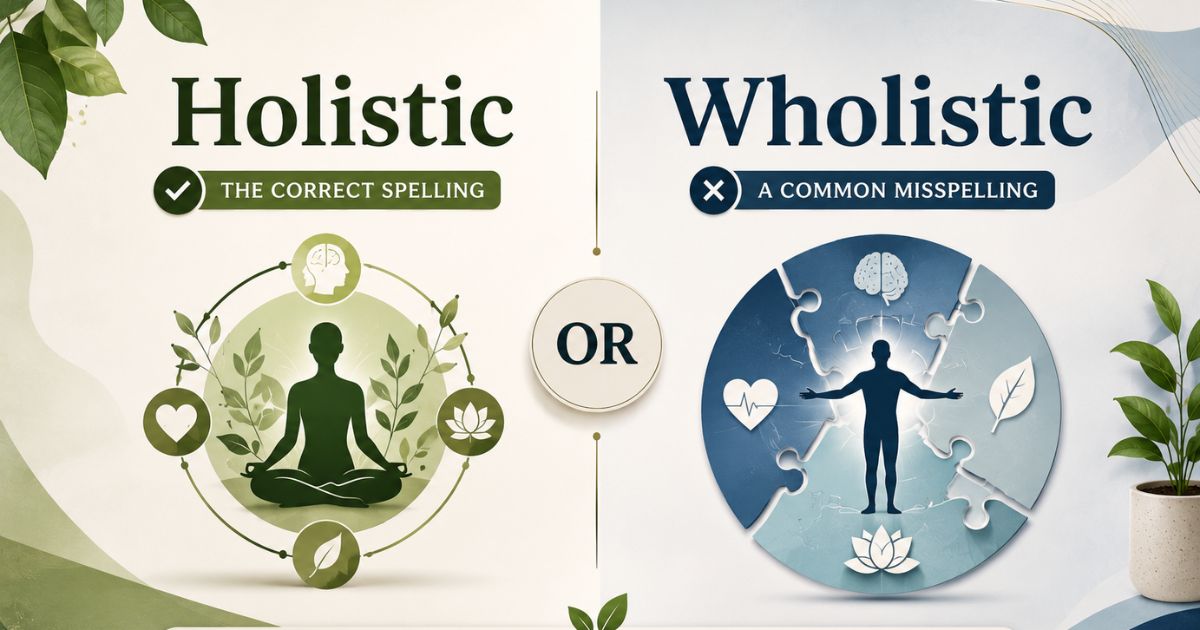
In a world filled with complicated health trends, a simple truth stands out: we are more than just our parts. This guide explores holistic and wholistic lifestyles, encouraging a balanced approach to health that nurtures the body, mind, and spirit. Learning about these methods can help you make more thoughtful choices for yourself and your loved ones.
Holistic or Wholistic Quick Answer
Holistic and wholistic approaches often get confused, but they carry distinct meanings that can enrich our understanding of well-being.
- Holistic typically focuses on the interconnectedness of mind, body, and spirit. It emphasizes treating the whole person rather than just specific symptoms.
- Wholistic, on the other hand, echoes that sentiment by stressing the importance of integrating all parts of life — social, emotional, and environmental.
Both approaches advocate for balance and harmony in our lives and encourage personal growth. By embracing a holistic view, we open ourselves to deeper healing and self-awareness. Wholistic practices invite us to consider our entire environment and relationships, highlighting how they influence our overall health.
Explore our related article on Comming vs Coming: Easy Grammar and Spelling Guide
Meaning of Holistic (Simple Explanation)
Holistic means looking at the whole picture rather than just focusing on individual parts. It’s about understanding that everything is connected, whether it’s our body, mind, or environment.
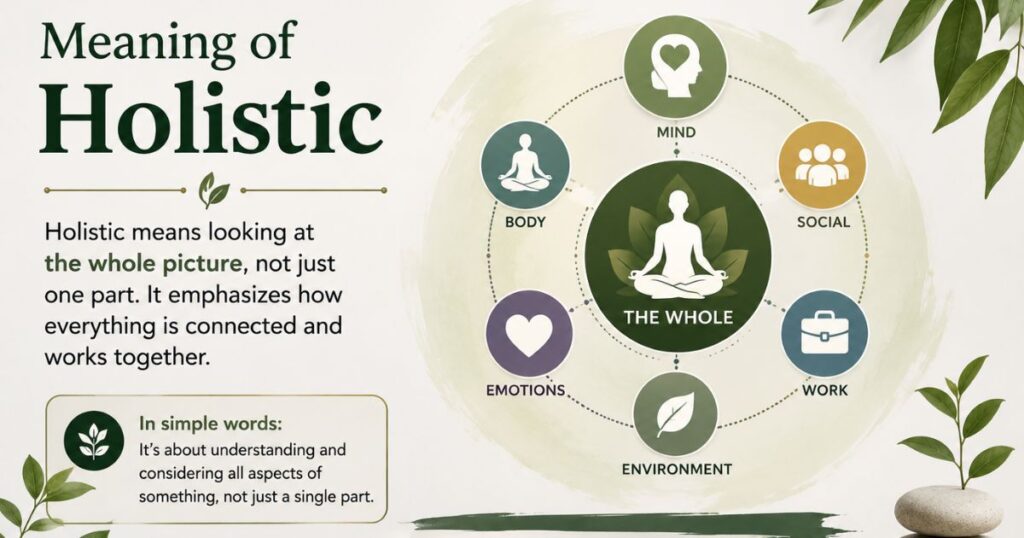
Key insights into holistic thinking include:
Interconnectedness:
Every part of our being affects the others. Feeling stressed mentally can impact our physical health and vice versa.
Balance and Harmony:
A holistic perspective encourages finding balance in life, promoting wellness instead of just treating illness.
Wholeness over Fragmentation:
Instead of isolating symptoms, this approach seeks deeper understanding, aiming for long-term solutions.
Embracing a holistic viewpoint can enrich our lives, leading to more meaningful connections and healthier choices.
Example
In our daily lives, think about preparing a healthy meal. Instead of just grabbing ingredients like chicken, vegetables, and rice, a holistic approach looks at the entire meal experience. It involves considering nutritional balance, flavors, and even the joy of sharing with family.
When you prepare a meal from a holistic viewpoint, you might:
- Choose organic vegetables for better health benefits.
- Pay attention to how the flavors complement each other.
- Set a lovely table to enhance the dining experience.
- Consider the emotional connections made while cooking and dining together.
Embracing a holistic approach in daily tasks enriches our experiences, making us feel more connected with ourselves and others.
Simple Definition
“Holistic = considering all parts together.”
Definition of holistic: https://www.youtube.com/watch?v=MnVUzN9NtaQ
Explore our related article on Loot vs Lute: Meaning, Spelling Pronunciation
Wholistic Meaning Explained
Wholistic meaning goes beyond just considering individual parts; it embraces the whole picture, integrating mind, body, and spirit.
- Emphasizes balance in life, encouraging harmony between work, family, and personal passions.
- Inspires mindfulness, promoting a greater awareness of our thoughts and feelings.
- Supports a sense of community, highlighting the importance of relationships and shared experiences.
Adopting a wholistic perspective can lead to profound transformations. It invites us to explore not just our physical health, but also our emotional and spiritual needs.
Explore our related article on Noteable or Notable Learn the Correct Spelling
Holistic vs Wholistic Key Differences
Both terms share a focus on the whole, but they come from different angles.
- The holistic approach often emphasizes the interconnection of body, mind, and spirit in health and well-being. It invites individuals to consider all aspects of their lives, fostering balance and harmony.
- On the other hand, wholism tends to highlight the importance of viewing systems as complete entities. This perspective is often applied in fields like education and ecology, where understanding the whole picture is crucial.
| Feature | Holistic | Wholistic |
|---|---|---|
| Origin | Derived from “holos” (whole) | Derived from “whole” |
| Focus | Mind, body, spirit connection | Systems and relationships |
| Context | Health and wellness | Education and ecology |
| Approach | Integrative and personal | Systematic and comprehensive |
| Philosophy | Balance and harmony | Interconnectedness |
| Application | Therapy and self-care | Analysis of ecosystems and structures |
| Goal | Personal growth | Greater understanding of systems |
| Perspective | Individual-centric | Community and global-centric |
Wholistic vs Holistic: https://www.facebook.com/HHABoonsboro/videos/wholistic-vs-holistic/2642080105860981/
Why Do People Use Wholistic?
People turn to wholistic approaches for various reasons that resonate deeply with their lives. This mindset embraces the interconnectedness of body, mind, and spirit, offering more than just a quick fix.
- Balanced lifestyle choices.
- Natural healing methods.
- Personal empowerment journey.
- Community support networks.
- Mindful living practices.
| Select Instalments Or Installments Which One Is Correct | Instalments Or Installments Which One Is Correct |
|---|
Origin of Holistic or Wholistic
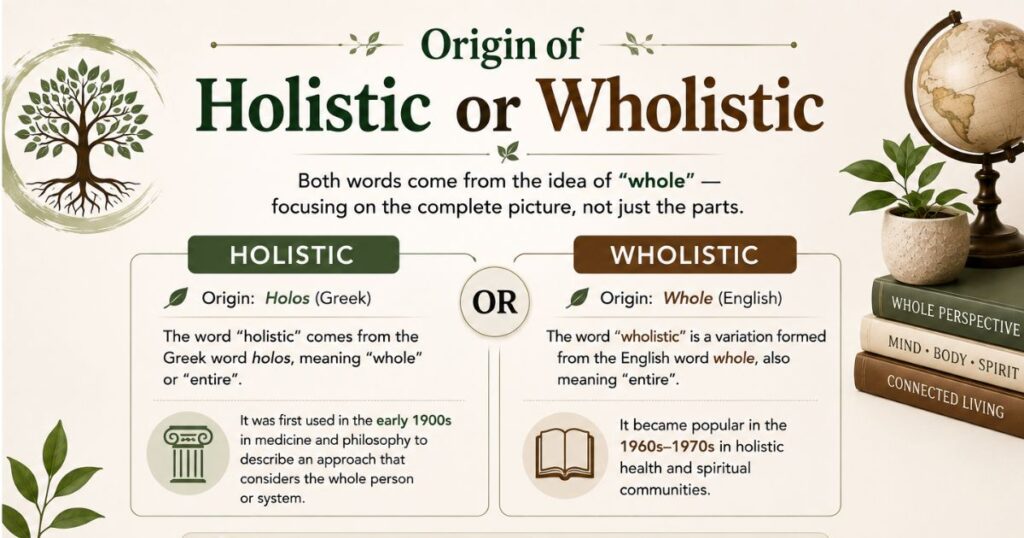
The origin of the term “holistic” stems from the Greek word “holos,” meaning “entire or all”. It first gained traction in the early 20th century, particularly within healthcare and philosophy, as people recognized the significance of viewing individuals as complete entities rather than just a sum of their parts.
- Focus shifted towards integration, emphasizing the interplay between mind, body, and spirit.
- This approach encourages healing practices that consider emotional, social, and environmental factors.
- The spelling “wholistic” appeared later as a reinterpretation, not the original form.So historically and linguistically, holistic is the authentic form.
Today, holistic methods extend beyond health, influencing education, business, and personal development.
Explore our related article on Implicit vs Complicit Clear Differences Explained
What is a Holistic Approach?
A holistic approach means looking at the whole person rather than just individual parts. Instead of treating only symptoms, it considers emotional, social, environmental, and physical factors that contribute to well-being.
A holistic approach examines how different parts are connected and how they influence each other.
Instead of asking, “What is the one problem?” it asks, “What factors are contributing to the problem?”
Holistic Approach in Everyday Life
In real life, people often use a holistic approach without realizing it.
For example, if someone feels tired every day, they may not only look at their sleep. They may also consider their diet, exercise, stress, work schedule, and overall health. Looking at all these factors together gives a better understanding of the situation.
Explore our related article on Dysregulated vs Disregulated How Are They Connected?
Real-Life Examples of a Holistic Approach
In Education
Teachers may consider a student’s grades, attendance, confidence, family environment, and learning style before deciding how to help.
In Health
Doctors may look at symptoms along with diet, exercise, sleep, stress, and medical history instead of treating only one symptom.
In Business
Business owners may examine employees, customers, finances, competition, and long-term goals before making important decisions.
In Personal Development
A person may focus on mental health, physical fitness, relationships, education, and career goals together to improve their overall life.
- A busy professional might practice deep breathing during breaks, leading to improved focus.
- A parent dealing with emotional fatigue might explore family activities that strengthen bonds, like cooking meals together.
- A fitness enthusiast could visit a nutritionist not just for weight loss but to enhance energy levels for workouts.
Explore our related article on Ingage vs Engage Stop Confusing These Two Words Today
Benefits of a Holistic Approach
Empowerment: Individuals take charge of their well-being, fostering a sense of control and purpose.
Improved Mental Health: Integrating therapy with lifestyle changes can reduce anxiety and depression.
Enhanced Physical Wellness: Combining nutrition, exercise, and mindfulness leads to better overall health.
Stronger Relationships: Addressing emotional and social aspects promotes deeper connections with others.
Adaptability: Holistic strategies can be tailored to fit individual needs, making them more effective.
Sustainable Practices: Focusing on long-term solutions encourages healthy habits that last over time.
Simple Example
For Example ,a student who is struggling in school.
- A non-holistic approach might focus only on low test scores.
- A holistic approach would also look at sleep habits, study routines, stress, family support, classroom environment, and possible learning difficulties.
| Explore our related article on | Passtime or Pastime:Which Spelling Is Correct? |
|---|
Holistic Approach vs Focusing on One Part
| Holistic Approach | One-Part Approach |
|---|---|
| Looks at the whole situation | Focuses on one issue |
| Considers connected factors | Ignores other influences |
| Finds root causes | Treats symptoms |
| Aims for long-term solutions | Often provides quick fixes |
Understanding Holistic Health
Holistic health goes beyond just treating symptoms; it seeks to address the whole individual. This means considering emotional, social, and physical aspects, ensuring that all parts of life support well-being.
- Mind-Body Connection: Mental state can profoundly impact physical health, emphasizing how stress management isn’t just about relaxation techniques.
- Lifestyle Choices: Everything from what we eat to how we move plays a role in our overall vitality. Small, daily decisions can lead to significant changes over time.
Explore our related article on Bearable vs Bareable: Which Spelling is Correct?
Embracing Personal Responsibility
Taking charge of your health journey is empowering. When individuals understand that their choices affect their health, it fosters a sense of ownership.
- Self-Care Practices: Engaging in activities like journaling or meditation can deepen self-awareness and promote healing.
- Community Support: Surrounding yourself with like-minded individuals can provide motivation and encouragement on your path to better health.
Individualized Paths to Wellness
Everyone’s journey is unique, and holistic health recognizes that personalized approaches are essential. What works for one person may not work for another, and that’s perfectly okay.
- Tailored Treatments: Whether it’s nutrition, therapy, or exercise, customizing your approach can lead to more effective results.
- Emotional Exploration: Understanding past experiences and their influences can foster profound change, guiding individuals toward a more fulfilling life.
The Journey of Balance
Achieving balance is an ongoing process, not a one-time destination. Embracing the ebb and flow of life can be liberating.
- Acceptance of Growth: Recognizing that progress may not always be linear helps set realistic expectations.
- Holistic Integration: Incorporating various practices — like yoga, healthy eating, and mindfulness — creates a well-rounded approach, nurturing all facets of health.
How Holistic Care Works in Medicine
Understanding Holistic Care
Holistic care in medicine treats the whole person, not just the symptoms. It recognizes that our physical health is intertwined with emotional, mental, and spiritual well-being. This multifaceted approach can lead to more personalized and effective treatment plans.
Key Elements of Holistic Care
- Patient-Centered Focus: In holistic care, patients are active participants. Their stories, feelings, and lifestyles matter.
- Interdisciplinary Collaboration: Various healthcare professionals, such as doctors, therapists, and nutritionists, work together, sharing insights that benefit the patient.
- Lifestyle and Wellness Education: Health is influenced by habits. Educating patients on nutrition, exercise, and stress management encourages healthier choices.
Making Connections
Holistic care emphasizes connections — between the mind and body, between patients and providers, and among different health practices. This interconnectedness fosters a sense of community, where individuals feel understood and supported in their healing journey.
Navigating the Journey
Patients engaging in holistic care often find themselves more empowered in their healthcare decisions. They develop coping mechanisms and resilience that extend beyond clinical appointments, enriching their lives in profound ways. This journey is not just about treating illness; it’s about cultivating a healthier, more fulfilling life.
Explore our related article on Focussing or Focusing : Which One is Correct?
Holistic Thinking in Everyday Life
Mindful Moments:
Incorporate small moments of mindfulness into your day. Whether it’s during your morning coffee or while walking, taking a moment to breathe deeply allows you to ground yourself and reflect.
Choose Connections:
Engage with your surroundings and the people around you. Instead of viewing tasks in isolation, consider how they affect your overall well-being and relationships. Every interaction is an opportunity to connect and grow.
Balance in Choices:
Strive for balance in your decisions — be it work-life harmony or emotional health. Recognizing the interconnectedness of your choices can lead to more fulfilling outcomes, allowing you to feel more centered amidst chaos.
Creative Problem-Solving:
When challenges arise, think creatively. Combine various perspectives, resources, and ideas. This diverse approach not only fosters innovation but nurtures an adaptive mindset, enabling you to tackle situations holistically.
Reflect and Adapt:
Regularly reflect on your experiences. Ask yourself how different aspects of your life interact and influence one another. This ongoing process encourages personal growth, helping you to adapt and thrive in various aspects of life.
Why Holistic Thinking Matters
Holistic thinking encourages looking at the bigger picture. and innovation, leading to unique solutions.
A Broader Perspective on Problem-Solving
- Interconnectedness: Understanding how various elements influence each other enhances decision-making.
- Synergy: Combining different ideas can create outcomes greater than the sum of their parts.
Enhancing Relationships
Thinking holistically fosters deeper connections between people. When we consider the context and emotions behind actions, we can respond more compassionately.
- Empathy: By acknowledging others’ perspectives, we nurture trust and collaboration.
- Shared Goals: Recognizing common ground can unite teams toward a shared vision.
Improving Adaptability
In a rapidly changing world, holistic thinking equips us to adapt. By considering external factors, we can pivot strategies swiftly and effectively.
- Resilience: A comprehensive view helps us anticipate challenges and respond proactively.
- Continuous Learning: Embracing change as part of a larger system promotes a growth mindset.
Healthier Decision Making
Holistic thinking cultivates better choices. When we weigh various influences, our decisions tend to be more thoughtful and balanced.
- Informed Choices: Gathering diverse insights leads to well-rounded decisions.
- Long-Term Vision: Focusing on sustainability encourages benefits that extend beyond immediate outcomes.
Cultivating Personal Growth
Adopting a holistic mindset can ignite personal transformation. It invites self-reflection and a deeper understanding of one’s values and aspirations.
- Mindfulness: Being aware of our thoughts and feelings builds inner clarity.
- Purposeful Living: Aligning actions with broader life goals can enhance fulfillment and happiness.
Explore our related article on Different or Diffrent the Complete guide
Holistic vs Related Approaches
When exploring holistic versus related approaches, it’s clear that both offer unique lenses through which to view health and wellness.
| Aspect | Holistic Approach | Related Approach |
|---|---|---|
| Focus | Entire person (mind, body, spirit) | Specific health aspects |
| Methodology | Integrative techniques | Targeted strategies |
| Self-discovery | High emphasis | Variable emphasis |
| Treatment | Personalized and broad | Focused and specific |
| Connection | Sees every part as interconnected | Recognizes some connections |
Common Mistakes People Make
- Confusing holistic with wholistic.
- Overlooking emotional health importance.
- Ignoring individual journey uniqueness.
- Neglecting practical application consistently.
- Assuming all remedies are universal.
While both holistic and wholistic aim for a complete understanding of health, people often confuse their meanings. Holistic approaches focus on the whole person — mind, body, and spirit — while wholistic emphasizes interconnectedness.
This misunderstanding can lead to misapplication of concepts in personal wellness.
Another common mistake is neglecting the emotional aspect of health. Emotional well-being is just as vital as physical health.
Furthermore, each person’s path to wellness is unique; a one-size-fits-all approach simply doesn’t work.
Explore our related article on Shinning or Shining the Correct Spelling
Real-Life Case Study
In the journey of understanding holistic health — often spelled as “wholistic” — it’s essential to recognize its emphasis on treating the whole person.:
- Sarah’s healing began with a detailed assessment of her life, including diet, sleep patterns, and emotional well-being.
- She embraced a plant-based diet, discovering that nutrition profoundly impacted her mental clarity.
- Regular yoga and mindfulness practices became key, helping her reconnect with her body and reduce stress.
- Sarah found support in a community group, which alleviated feelings of isolation and reinforced connection.
- Integrating natural supplements, she experienced reduced fatigue and enhanced energy levels.
- Her journey reflects the importance of listening to one’s body, recognizing its whispers and screams alike.
By focusing on the interconnectedness of mind, body, and spirit, individuals can cultivate comprehensive health and foster a deeper sense of belonging — a gift that enriches the human experience.
Fitness Coaching Transformation
- A dedicated client, Jane, entered a fitness program feeling overwhelmed and out of balance. Through a holistic approach, we focused not just on her physical fitness but also her mental and emotional well-being.
- Weekly yoga sessions helped Jane cultivate mindfulness, allowing her to connect deeper with her body during workouts. This blend of fitness and meditation created a supportive environment for her changes.
- Incorporating nutritional guidance, we tailored her meals to boost energy and overall mood, addressing her cravings for both comfort food and health.
Result:
- Over six months, Jane lost 30 pounds, but more importantly, she gained confidence and a renewed appreciation for her body.
- Her stress levels plummeted, and she reported improved sleep patterns, showcasing the power of a comprehensive approach.
- Friends and family noticed her vibrant energy and positive outlook, inspiring them to adopt similar lifestyle changes. This transformation wasn’t just about weight loss; it was about cultivating a life filled with joy and balance.
FAQs
- What does holistic mean?
Ans:Holistic means looking at the whole person — body, mind, and spirit — rather than just treating individual parts. - Is there a difference between holistic and wholistic?
Ans:Not really! “Wholistic” is just a variation of “holistic,” both focusing on a complete approach to health and wellness. - Can holistic practices really improve my health?
Yes! Many people find that holistic practices, like yoga and meditation, help reduce stress and promote overall well-being. - Do I need to give up my current treatments to try holistic methods?
Ans:Not at all! Holistic approaches can complement your current treatments. Always talk to your healthcare provider first. - What are some common holistic practices?
Ans:Common practices include acupuncture, massage, herbal medicine, meditation, and nutrition counseling. - Is holistic health just about alternative medicine?
Ans:No, holistic health includes traditional medicine too. It’s about finding the best mix for each individual’s needs. - How can I start my holistic journey?
Ans:Begin by exploring areas that interest you, like yoga or meditation, and gradually incorporate them into your routine. - Is holistic health expensive?
Ans:Costs vary. Some practices, like walking in nature or meditating, are free. Others, like therapy or acupuncture, may have fees — but many consider them worth it!
Conclusion
In conclusion, whether you choose to embrace the term “holistic” or “wholistic,” the core idea remains the same: valuing the whole person and their interconnectedness. Understanding this concept can lead to a more fulfilling and balanced life.