
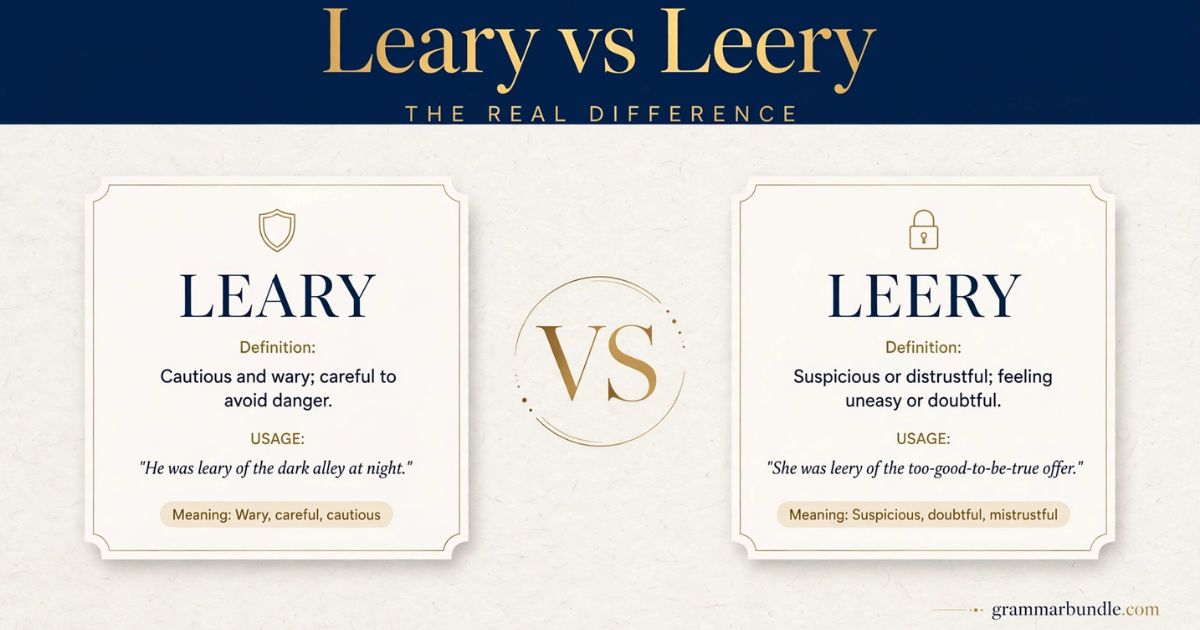
The English language is filled with words that sound alike but have distinct meanings, and “leary” or “leery” are prime examples of this often-overlooked phenomenon. Understanding these differences is essential for effective communication and for avoiding embarrassing blunders in writing and conversation.
Leary or Leery Quick Answer
Understanding the difference between “leary” or “leery” can illuminate our everyday conversations. While both words deal with caution, they have distinct meanings that can shape how we express our thoughts.
“Leery” means being wary or suspicious, often due to past experiences or a gut feeling.
“Leary,” while less common, is an alternative spelling of “leery” and isn’t universally recognized.
Embracing the nuances of language can enhance communication. Here are a few points to consider:
- Leery: This word often surfaces when someone feels hesitant about a situation, like meeting new people or trying something risky.
- Leary: Use this sparingly, as it may confuse readers. Stick to “leery” for clarity.
- Context matters: Providing a clear context ensures your audience understands your caution, making your message resonate more deeply.
For a clearer understanding of similar spelling differences, read our article on Comming vs Coming: Easy Grammar and Spelling Guide
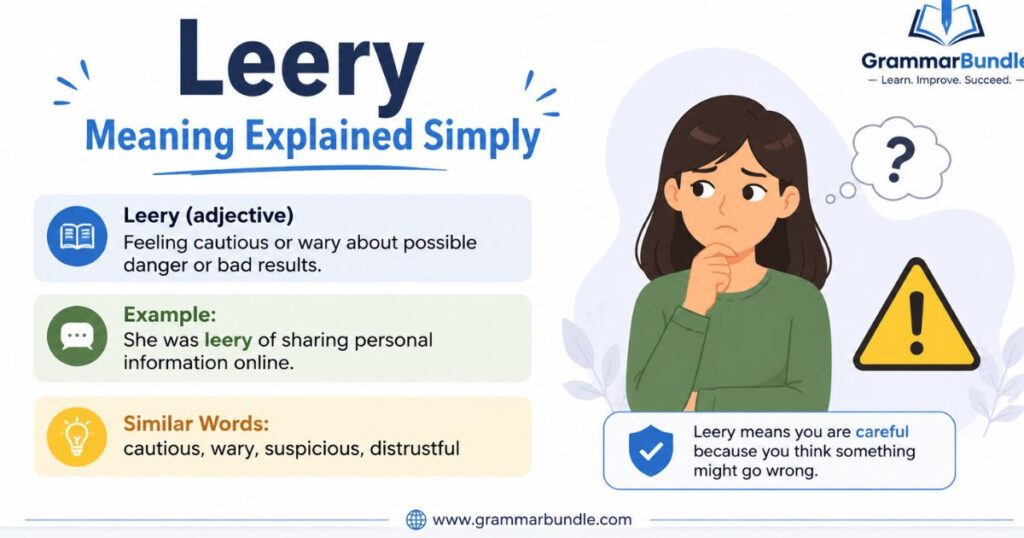
Leery Meaning Explained Simply
Being “leery” means having a cautious or suspicious attitude toward something or someone.
When we say someone is leery, it suggests a sense of wariness and the instinct to tread lightly.
This word can describe feelings we might have when facing new situations or people that seem too good to be true.
Here are some key aspects of being leery:
Self-Protection:
It can be a natural instinct that helps us stay safe from potential harm.
Trust Issues:
When someone is leery, it may stem from past experiences that dampened their trust.
Awareness:
Being leery encourages us to notice red flags and think critically about our surroundings.
Learn more about commonly confused English words in our detailed guide to Loot vs Lute: Meaning, Spelling Pronunciation
Leery Definition with Real Clarity
Leery refers to a feeling of wariness or distrust.
When someone feels leery, they are cautious and hesitant, often because of past experiences or gut instincts. This word paints a vivid picture of a person holding back, eyeing a situation with skepticism.
In everyday life, being leery can serve as a protective mechanism. It encourages us to pause and reflect before diving into new situations or relationships. Here’s why embracing this feeling can be beneficial:
- Precautionary Principle: It helps in assessing risk, ensuring we’re not easily swayed by charming smiles or smooth talk.
- Emotional Intelligence: A leery disposition often signifies heightened awareness of social dynamics, making us more attuned to underlying motives.
- Self-Protection: It creates a shield against potential disappointments or manipulations, allowing us to safeguard our well-being.
For Example:
- After experiencing betrayal, a person might be leery of forming new friendships.
- When buying a used car, one might feel leery of a deal that’s just too cheap.
- Shopping online can make many feel leery about sharing personal information
For more useful English spelling tips, explore our article on Uninclined vs Disinclined the Real Difference — Elementor
Leery Definition with Real Clarity
What Does “Leery” Mean?
The word “leery” describes a feeling of caution or suspicion.
When someone is leery, they are careful and watchful, often because they’ve been let down before or because they sense something isn’t quite right. I
t’s that instinct that makes you pause before jumping into a new situation or trusting someone completely. This common pattern can be seen in many aspects of life, from friendships to business deals.
Everyday Examples of Being Leery
Imagine you hear about a new investment opportunity that sounds too good to be true. You might feel leery about putting your money in, instinctively waiting to gather more information.
Another example is in relationships; if someone has a history of dishonest behavior, it’s natural to feel leery about trusting them again.
- Being cautious isn’t bad; it can protect you.
- Learning from past experiences shapes your perspective.
- Trust is earned through consistent, honest actions.
The Value of Being Leery
Feeling leery can actually serve as a useful tool in decision-making. It encourages you to pause and think twice, allowing for deeper evaluation before acting. This mindset can lead to better outcomes, helping you avoid pitfalls that others might overlook.
You may visit : https://www.merriam-webster.com/dictionary/leary
Leary Meaning Is It Any Different?
The words “leary” and “leery” are similar, but they carry different spellings.
“Leery,” the more common term, indicates caution or suspicion. It captures the essence of being wary and mindful of potential pitfalls.
Common Pattern:
- Leery: Typically used in everyday conversation to express doubt or skepticism.
- Leary: An alternative spelling that is less recognized, often seen in regional dialects or creative expressions.
Real-World Examples
When expressing caution, people generally lean toward “leery.”
Examples:
“He felt leery about taking the shortcut.”
“In some communities, they might spell it leary, but the meaning remains the same.”
While “leery” is a staple in English, the occasional use of “leary” adds a layer of variation , illustrating the evolution of language in different landscapes.
For a clearer understanding of similar spelling differences, read our article on Noteable or Notable Learn the Correct Spelling
Leary vs Leery Difference (Clear Comparison)
| Feature | Leary | Leery |
|---|---|---|
| Definition | Cautious or wary | Cautious or suspicious |
| Recommended | No | Yes |
| Usage | Rarely used in modern English | Commonly used in everyday language |
| Context | Can refer to people (surname) | Refers to one’s feelings of doubt or suspicion |
| Part of Speech | Adjective (rarely used) | Adjective |
| Connotation | Generally neutral | Slightly negative |
| Example Sentence | “John Leary is a talented artist.” | “She was leery of his sudden offer.” |
Leery vs Leary Usage What You Should Actually Use
Use leery when:
When you want to express caution or skepticism, “leery” is your go-to choice. This word captures that nagging feeling of uncertainty that makes you hesitate. It’s often used in situations where trust is an issue, like when meeting someone new or evaluating a proposal that seems too good to be true.
For example, saying “I’m leery of that investment” clearly communicates your wariness.
- It’s perfect for expressing doubt or suspicion.
- Use it in both casual and formal contexts.
- It adds depth to your communication, showing you’re thoughtful and discerning.
Avoid leary because:
Using “leary” is generally a misstep. This misspelling is often confused with “leery,” which can muddle your message and lead readers to question your credibility.
While “leery” reflects caution, “leary” does not have a defined meaning in standard English, making it sound incorrect or unpolished.
- It lacks recognition in most dictionaries.
- It can undermine your authority in professional settings.
How to Spell Leery Without Confusion
Correct Spelling
It features the letters L-E-E-R-Y.
Memory Trick
To help remember, try this simple phrase: “I’m leery of people who leer.”
- Break it down: L-E-E-R + Y
- Create a mnemonic: “Leery cats often leer.”
Leery Pronunciation (Say It Right)
To pronounce “leery” correctly, say it as “LEER-ee.”
The first part rhymes with “cheer,” while the second part is a softer “ee” sound.
Practicing it aloud can reinforce the correct rhythm, making it a part of your vocabulary.
Why Is Leery Spelled That Way?
The word “leery” often raises eyebrows with its unusual spelling, but it has intriguing roots.
Originating from the word “leery,” a variant of “leery,” it comes from a dialect form in Northern England, where it meant being wary or suspicious.
- Connection to Dialects: The spelling reflects its Northern English roots, highlighting how language evolves in different regions.
- Evolution of Meaning: Initially linked to being cautious, “leery” has maintained that sense of wariness over time.
- Cultural Influence: The adoption of such dialectical terms into standard English emphasizes the interplay between culture and language.
Why Do People Spell Leary or Leery?
Common Misconceptions
- Language evolution phenomenon
- Confusion with “leary”
- Mistranslation in culture
Regional Influences
- Dialect variations exist
- Influence from media
- Local pronunciation changes
Educational Factors
- Lack of formal education
- Informal communication preference
- Misleading online sources
You may seek guidance from: https://engglory.com/leery-or-leary/
Leery vs Wary vs Weary Don’t Mix Them Up
Understanding the differences between “leery,” “wary,” and “weary” can be a fun exercise in language mastery. These words may sound alike but convey very different feelings and states of mind.
| Feature | Leery | Wary | Weary |
|---|---|---|---|
| Definition | Suspicious or cautious about something | Cautious or careful, often due to past experience | Physically or mentally exhausted |
| Usage Context | Typically used in informal settings | Often used in both formal and informal contexts | Commonly used in everyday conversation |
| Emotional Tone | Suggests distrust | Implies vigilance | Conveys fatigue or tiredness |
| Synonyms | Skeptical, distrustful | Cautious, guarded | Exhausted, fatigued |
| Common Pairs | “Leery of” | “Wary of” | “Weary from” |
Synonyms and Antonyms of Leery
Synonyms
- Suspicious
- Wary
- Cautious
- Skeptical
- Apprehensive
- Doubtful
- Distrustful
Antonyms
- Trusting
- Confident
- Open
- Receptive
- Faithful
- Assured
- Unquestioning
Leery vs Leary Examples in Real Life
Correct Usage with Leery
When someone feels unsure or skeptical about a situation, they are often leery. For example, a person might be leery about trusting a new colleague with sensitive information. In daily interactions, being leery can prevent potential pitfalls and protect against misguided beliefs.
- Trust issues arise
- Cautious approach needed
- Safeguarding emotions
For Example
- Being leery can save you from pitfalls.
- A touch of leary humor can lighten the mood during tense discussions.
Less Recommended Usage with Leary
Using “leary” instead of “leery” may make your writing seem less credible. This misspelling can confuse readers and dilute your message. It’s always better to stick with the correct form to maintain clarity and impact.
- Can cause confusion
- Weakens credibility
- Impacts readability
For Example : “feeling leary about trying that spicy new dish.”
But “leary” isn’t widely recognized as an English word, but it’s often used as a variation of “leery.”
Case Study Why Leery Builds Trust in Writing
Building Trust Through Transparency
Leery’s approach to writing shines because of its commitment to honesty and openness. By clearly stating the intent behind each piece, readers naturally develop a sense of trust. This transparency allows them to feel more connected to the content and the writer.
- Candid Communication: Leery shares not just the finished product but also the process behind it, allowing readers to see the evolution of ideas.
- Authenticity: Each piece reflects genuine thoughts and feelings, making it relatable to readers.
Engagement Through Relatability
Leery’s writing resonates due to its focus on everyday experiences. By weaving personal anecdotes into the narrative, the text becomes more engaging and meaningful. This relatability helps forge a bond between the reader and the writer.
- Shared Experiences: Readers find comfort in knowing that their struggles and joys are reflected in Leery’s words.
- Conversational Tone: The casual, friendly language invites readers in, creating a welcoming space for dialogue.
American English vs British English
- Leery: Commonly recognized in both American and British English, this term conveys a sense of caution or suspicion.
- For instance, someone might be “leery of a deal too good to be true.”
- In American English, “leery” is frequently used in casual speech, illustrating an understanding of risk and mistrust.
- In contrast, British English may employ “leery” less often but still acknowledges it, often favoring alternatives like “wary.”
Common Mistakes to Avoid
Common Mistakes to Avoid
When using leery, a few common errors can affect both spelling and meaning:
- Writing “leary” instead of “leery”: Use leery when you mean cautious, suspicious, or doubtful.
- Confusing “leery” with “weary”: Leery means cautious, while weary means tired or exhausted.
- Using “leery” to mean tired: Someone who is tired is weary, not leery.
- Forgetting “of”: The standard expression is “leery of,” such as He was leery of the unfamiliar offer.
- Treating “leary” as an alternative spelling: Leary may be a surname, but it is not the standard spelling of the adjective leery.
Where You’ll See Leery in Everyday Life
Business: “Investors remained leery of the company’s uncertain future.”
Shopping: “I’m leery of buying from an unfamiliar website.”
Work: “The manager was leery of changing the company’s current system.”
Travel: “They were leery of traveling during the severe weather.”
Relationships: “She was leery of trusting someone she had just met.”
Online Safety: “Users should be leery of suspicious links and unexpected offers.”
Discover the meaning and correct usage of another commonly confused word in our guide to Instalments Or Installments Which One Is Correct
Leery vs Leary Correct Spelling Final Answer
Understanding the nuances between “leery” and “leary” can save you from common pitfalls in writing.
Here’s why getting it right matters:
- Clarity: Proper spelling ensures your message is clear, avoiding any confusion that may distract from your point.
- Credibility: Using correct terms boosts your credibility as a writer; readers are more likely to trust your voice.
- Connection: When you communicate accurately, it enhances your connection with the audience, making your writing more relatable.
In short, “leery” holds a specific meaning while “leary” doesn’t carry weight in the English language. Paying attention to these details enriches your communication and strengthens the impact of your words.
- Leery is correct, common, and recommended
- Leary is rare and best avoided
What Is the Difference Between Leary and Leery?
Leery is the correct English adjective meaning cautious, suspicious, or doubtful.
Leary is generally a surname and is not the standard spelling when you mean cautious or suspicious.
FAQs
1. What does “leery” mean?
Answer: “Leery” means being cautious or suspicious about something. For example, if someone seems untrustworthy, you might be leery of them.
2. Is “leary” a correct spelling?
Answer: No, “leary” is not standard. The correct spelling is “leery” when referring to being cautious or wary.
3. Can you use “leery” in a sentence?
Answer: Sure! You could say, “I’m leery of buying electronics from unknown sellers.”
4. Are “leery” and “leery” interchangeable?
Answer: No, they are not interchangeable. “Leery” refers to suspicion, while “leary” is just a misspelling.
5. How do I remember the difference?
Answer: Think of “leery” with an “e” for “cautious” and match it with other words like “careful” or “wary.”
6. Can “leery” describe my feelings towards something positive?
Answer: Yes, you can be leery even about something good if it feels too good to be true or if there are red flags.
7. Are there synonyms for “leery”?
Answer: Yes! Some synonyms include cautious, wary, and skeptical.
8. Is “leery” used in everyday conversation?
Answer: Absolutely! People use it often when discussing situations that seem risky or untrustworthy.
Conclusion
It’s clear that understanding these terms (leary or leery ) can help improve your writing and communication. While “leery” refers to being cautious or wary, it’s easy to see how people might confuse it with the playful sound of “leary.” Remember, using the right word in the right context makes your message clearer.