
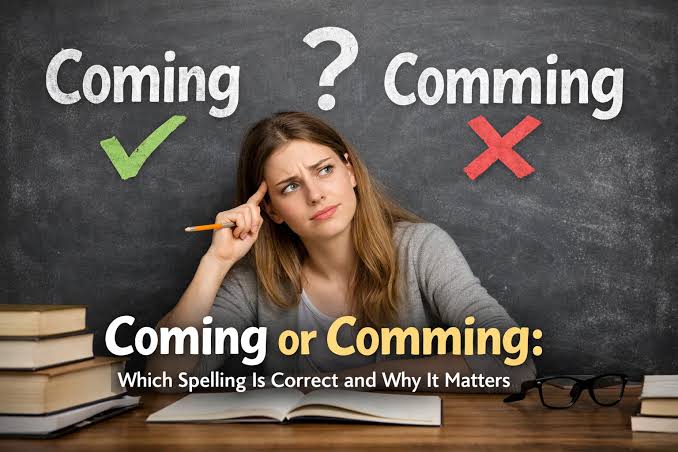
Many of us have stumbled over the difference “comming” vs “coming,” often if we are spelling them correctly. Grasping this difference is crucial, especially in a time when good communication is key.
People may search for https://grammarbundle.com/loot-vs-lute/
The Correct Spelling: Why “Coming” Is Right
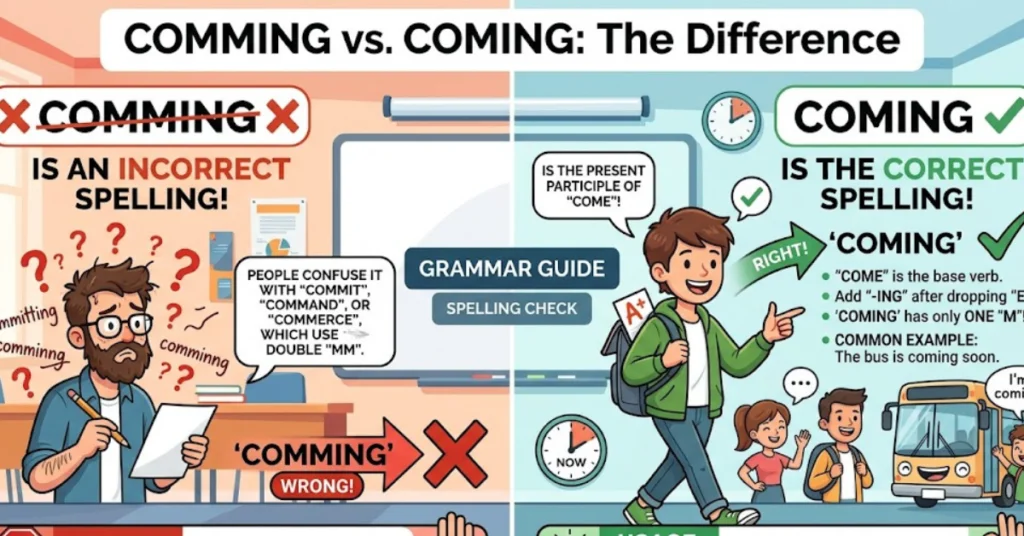
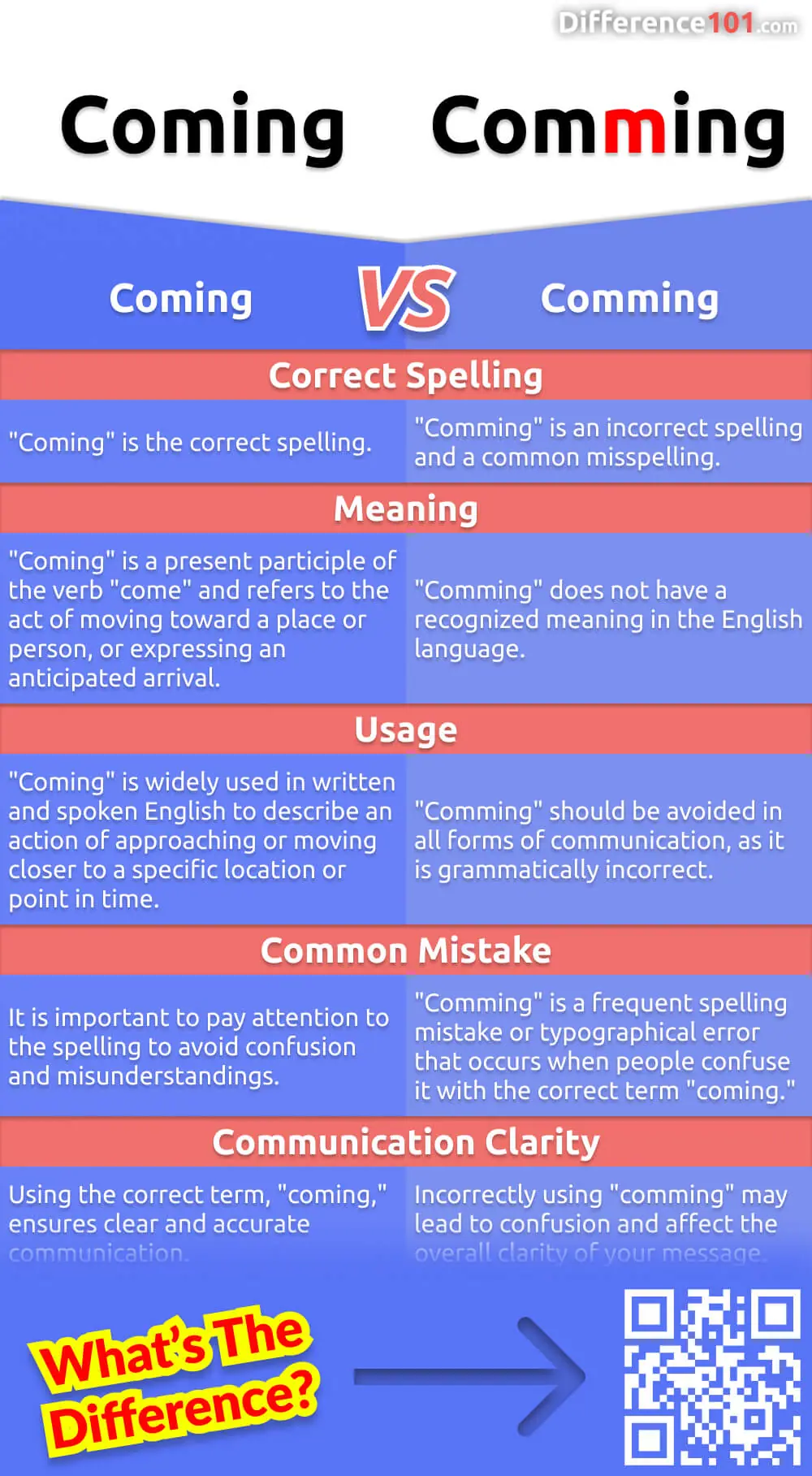
The Correct Spelling: “Coming” is the right form, indicating arrival or approach. “Comming” is a frequent misspelling and does not hold any meaning in English.
Quick Tip: Remember, “Coming” has an “o” and reflects action or an upcoming event.
Drop the “e” of “come” before adding “-ing.”
That’s why:
come → drop the “e” → add “-ing” → coming
Why “Comming” Is Always Wrong
Comming” is not recognized as a proper word in English, making it a spelling mistake that can undermine credibility.
Phonetic Pitfall: Many people incorrectly spell words based on how they sound.
The Grammar Behind “Coming”
The Grammar Behind “Coming” reveals a duality in language.
As a verb, “coming” embodies action, movement, and arrival.
For example, “She is coming home.”
As a noun, it transforms into an idea or concept, representing an event or moment.
For example, “The coming of age ceremony.”
Why People Misspell It as “Comming”
The misspelling of “coming” as “comming” often stems from phonetic confusion:
Sound over sight: People write how they hear.
Familiarity breeds mistakes: Frequent use without attention can create habits.
Tech influences spelling: Quick messages lead to shortcuts.
Collective memory: Many have seen “comming” enough to accept it
Impact of Misspelling on Communication
- Misspelling can act as a barrier in communication that leads to confusion.
- Trust can weaken when messages are filled with mistakes.
- People may get misspelled words as a lack of professionalism.
- Attention to details can waste the reader’s time.
Quick Memory Tricks to Remember “Coming”
- Focus on the spelling: Drop the “E” and don’t double the “M.”
- Visual reminders: A single “M” man on a journey,
- Practice: Pronouncing “coming” multiple times.
Words That Sound Similar (But Aren’t the Same)
The words that sound alike but have completely different meanings are called homophones.Here confusion is between coming and coming.
“Coming” can indicate future action, like “I’m coming to the party.”
“Comming” is a mistake that may confuse readers.
Commonly Misspelled “ing” Words:
| Incorrect | correct | Rule |
| Begining | Beginning | Drop consonant after short vowel |
| Occuring | occurring | Drop consonant after short vowel |
| Traveling | travelling | Drop consonant after short vowel |
| Makeing | Making | Drop silent “e” |
| Loveing | Loving | Drop silent “e” |
Tips to Improve Spelling and Avoid Future Mistake:
Reading regularly exposes you to proper spelling and vocabulary. Writing often helps solidify knowledge; the more you practice, the better you get.
Proofreading carefully catches mistakes.
Try word games or apps that challenge spelling in a fun way, making learning enjoyable.
The Opposite of “Coming”
| Words | Meanings | Examples |
| Going | Action of leaving a place. | She is going to the store . |
| Departing | Leaving a location permanently . | The train is departing in ten minutes. |
| Dissipating | Gradually fading away. | The fog is dissipating as the sun rises . |
| Retreating | Moving away from something. | The soldiers are retreating to safety |
Facts About the Word “Coming”
The word “coming” originates from the Old English “cuman,” meaning to arrive or approach.
It serves as a gerund or present participle of the verb “come,” emphasizing action in the present.
In common phrases like “coming soon” or “coming of age,” it conveys both anticipation and change.
The Synonyms of “Coming”:
| Synonym | Meanings | Examples |
| Approaching | Coming closer | The storm is approaching quickly. |
| Advancing | Moving forward | The team is advancing to the championship. |
| Arriving | Reaching destination | The train is arriving at noon . |
Conclusion:
Understanding the difference between “coming” and “comming” is essential for anyone looking to improve their writing skills. While “coming” is the correct form used to describe the act of arriving or approaching, “comming” is a common misspelling that can reduce your credibility.
FAQs:
- What is the difference between “comming” and “coming”?
Ans:”Comming” is a common misspelling, while “coming” is the correct form of the word that has the meaning of “to arrive or to occur”. - How can I remember to spell “coming” correctly?
Ans:”Coming” has one ‘m’ and ends with “ing.” You can associate it with “to come” . - Are there any exceptions in English where “comming” might be acceptable?
Ans:No, “comming” is not recognized as a valid word in standard English. - What are some synonyms for “coming”?
Ans:Synonyms include “arriving,” “approaching,” and “forthcoming”. - Can “coming” be used in different contexts?
Ans:Yes, “coming” can describe physical arrival, scheduled events, or even abstract concepts like trends . - How often do people misspell “coming” as “comming”?
Ans:It’s a relatively common mistake, especially among those who are unfamiliar with the spelling rules of English. - What resources can help me improve my spelling?
Ans:Online grammar tools, dictionaries, and educational websites are excellent resources for improving spelling skills. - Is there a grammatical rule that explains the use of “coming”?
Ans:Yes, “coming” is a gerund or present participle of the verb “come”.
If you want more details check : https://grammiffy.com/comming-or-coming