
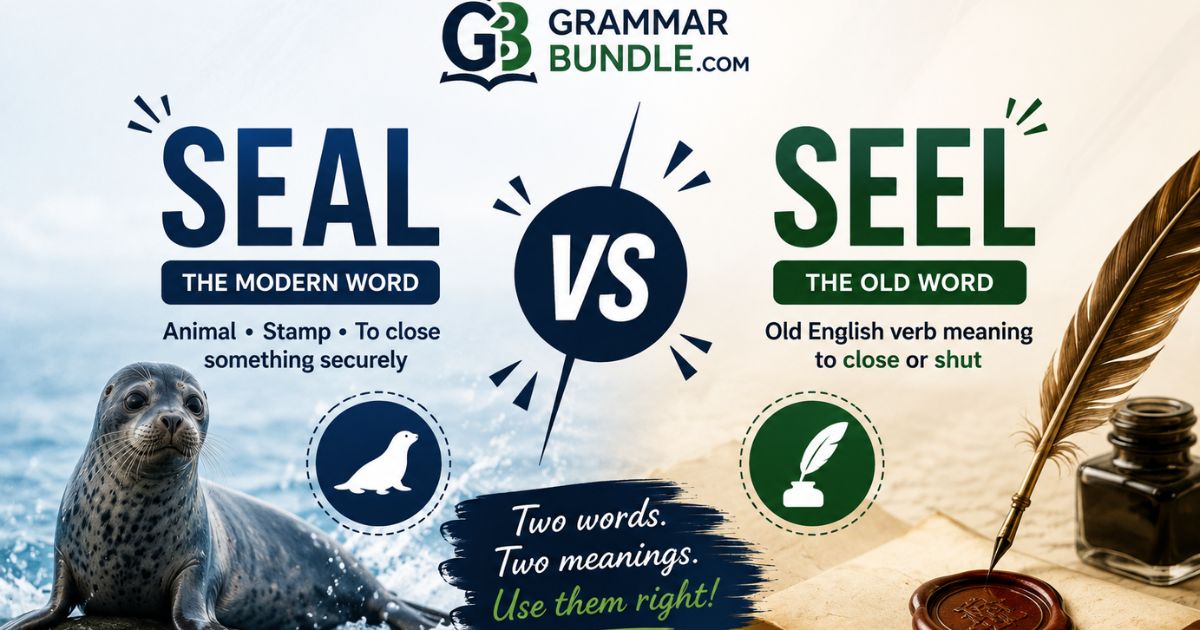
The words “seal” and “seel” are often confused because they look and sound similar, yet they have different meanings and uses. This common mix-up can affect clarity in both spoken and written English. Understanding their definitions and correct contexts, along with simple examples, can help you use these words accurately and confidently.
Seal vs Seel: The Simple Difference
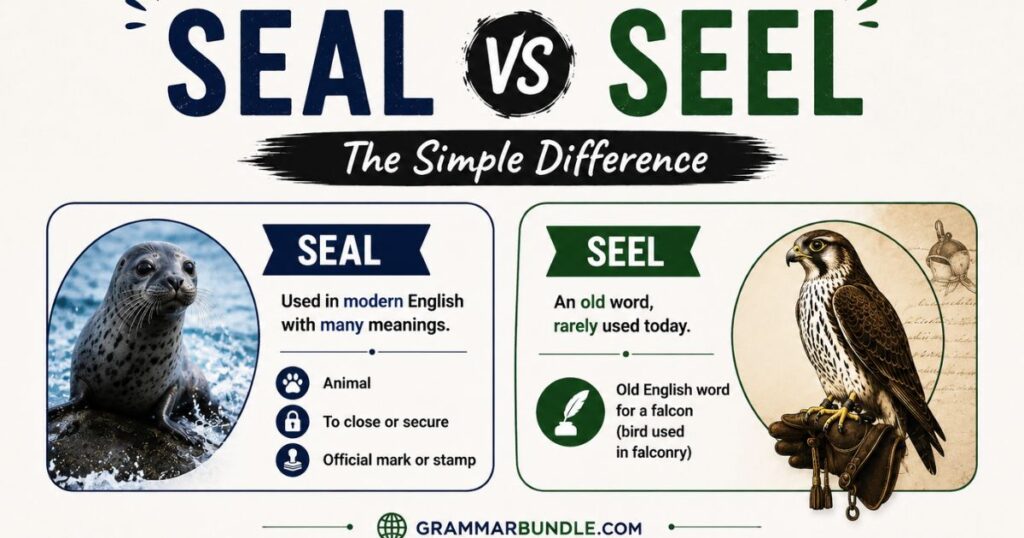
The words “seal” and “seel” can be confusing because they sound very similar but have different meanings and uses. “Seal” is a common modern English word that can refer to an aquatic animal, a stamp, or the act of closing something securely.
“Seel” is an old-fashioned word that is rarely used in modern English.
What “Seal” Means in English
The word “seal” has several meanings in English, depending on the context. It can describe an animal, an official mark, or the action of closing something securely. This makes “seal” a flexible word in everyday English.
Seal as a Noun: An Animal
As a noun, “seal” can refer to a marine mammal known for living in or near the water.
Example:
- We saw a seal swimming near the shore.
Seal as a Noun: An Official Mark
“Seal” can also mean an official mark used to authenticate documents or show authority. A wax seal is a traditional example that was once used on letters and important documents.
Example:
- The document carried an official seal.
Seal as a Verb: To Close Securely
As a verb, “seal” means to close something tightly or securely. It can be used for envelopes, containers, agreements, and deals.
Examples:
- Please seal the envelope before sending it.
- Make sure you seal the container properly.
- They sealed the agreement after the discussion.
These different uses show why “seal” can appear in both everyday and formal English.
Our Related artices you may like: Dysregulated vs Disregulated How Are They Connected?
Seel Meaning: The Forgotten Word
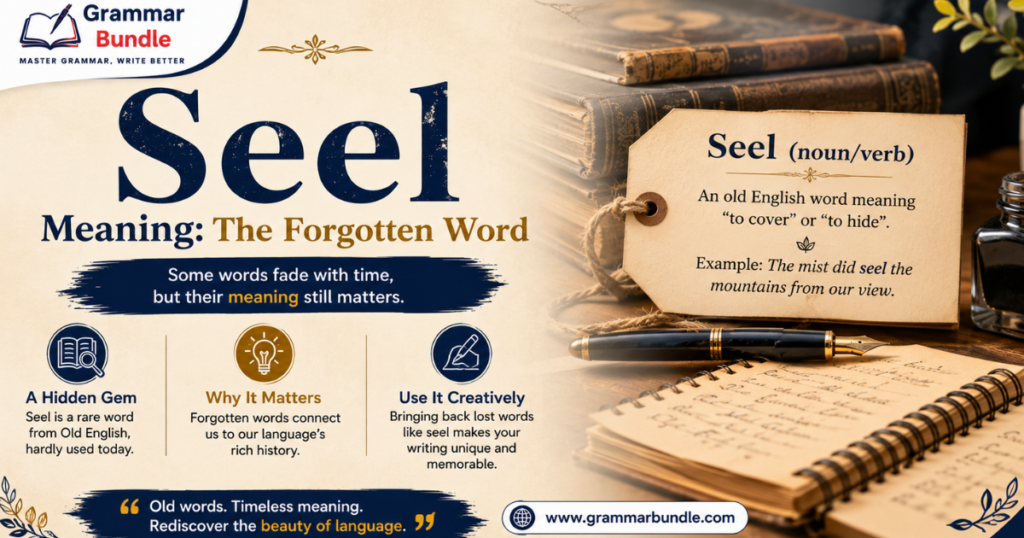
The word “seel” is an old English term connected with falconry, the traditional practice of training birds of prey. Historically, it referred to sewing a bird’s eyelids shut to keep it calm during training or transport. The word was mainly used in a time when falconry was an important skill, especially among the nobility.
Seel in Historical Falconry
In older texts, “seel” often appears with other falconry terms. The practice was used to limit a bird’s distractions and make handling and training easier.
Example:
- The falconer would seel the bird before training.
Why Seel Is Rare Today
The word “seel” gradually disappeared from everyday English as falconry practices changed and became less common. As the practice declined, much of its specialized vocabulary also faded. Today, “seel” is mainly found in historical texts or discussions about traditional falconry.
This makes “seel” an interesting example of how language changes along with cultural practices.
For more useful English tips, explore trusted grammar resource: https://grammarwrap.com/seal-or-seel/
Seal vs Seel: What Sets Them Apart?
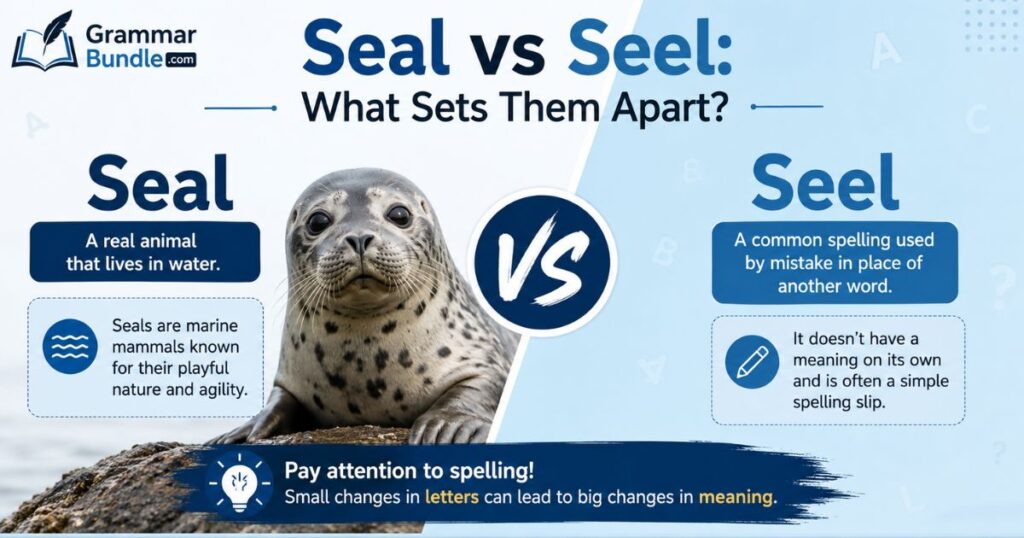
| Feature | Seal | Seel |
| Usage today | Very common | Very rare |
| Meaning | Has several meanings | Has a historical meaning |
| Recognition | Widely understood | Unfamiliar to most readers |
| Modern English | Standard word | Old-fashioned and rarely used |
The key difference is simple: “seal” is an active word in modern English, while “seel” mainly belongs to the history of the language.
For more helpful spelling tips, explore our guide on related grammar and spelling mistakes:Ingage vs Engage Stop Confusing These Two Words Today
Is It Seal or Seel? The Rule to Remember
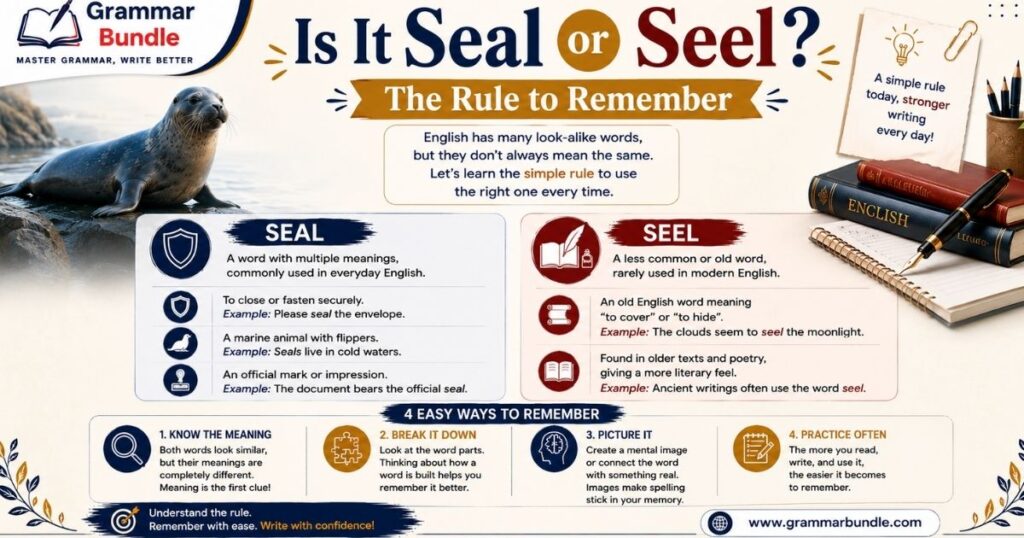
For modern English, “seal” is the word you should normally use. It works in everyday, business, and formal writing. “Seel” is a rare historical word and should only be used when the context specifically refers to its old meaning.
The Simple Rule
- Use seal in modern English.
- Use seel only in historical or literary contexts.
- If you are writing a normal sentence today, seal is the correct choice.
Seal vs Seel Grammar
“Seal” can work as both a noun and a verb in modern English. It can describe an object, a mark, or the action of closing or securing something.
“Seel” is not normally used in modern English grammar. Its use is limited to its historical meaning.
Correct Usage
- Please seal the envelope.
- They sealed the deal.
Historical Usage
- The falconer would seel the hawk before training.
For more helpful spelling tips, explore our guide on related grammar and spelling mistakes:Bearable vs Bareable: Which Spelling is Correct?
Seal vs Seel Usage in Real Life
Using “Seal” Naturally
You can use seal in many everyday situations:
- Seal an envelope
- Seal a container
- Seal a contract
- Seal a deal
It is also common in business and formal writing.
Using “Seel” in Rare Cases
You may come across seel in:
- Historical texts
- Literary works
- Falconry discussions
- Writing about traditional practices
Outside these contexts, seel may look like a spelling mistake.
Quick Reminder
Seal = modern and common
Seel = historical and rare
This simple distinction makes it much easier to choose the right word.
For more helpful spelling tips, explore our guide on related grammar and spelling mistakes: Focussing or Focusing : Which One is Correct?
Seal vs Seel Examples: Side by Side
The words “seal” and “seel” sound similar, but they have very different uses. “Seal” is common in everyday English, while “seel” is mainly connected with historical falconry.
Seal Examples
- She sealed the envelope carefully.
- They sealed the deal after the meeting.
- The bottle was tightly sealed.
These examples show how naturally “seal” fits into modern English.
Seel Examples
- Medieval falconers used to seel birds.
- Old texts mention the practice of seeling hawks.
These examples are mainly found in historical or specialized contexts.
Common Mistakes with Seal and Seel
The similar sound of these words can easily cause spelling confusion. Since “seel” is rarely seen today, some writers may accidentally use it when they actually mean “seal.”
Mistakes to Watch For
- Using seel instead of seal in everyday writing
- Thinking seel is simply another spelling of seal
- Confusing the two because they sound similar
- Using seel without a historical or falconry context
A Quick Context Check
If you are talking about envelopes, bottles, agreements, or everyday situations, use seal.
If the context is historical falconry, you may come across seel.
This simple context check can help prevent the most common mix-ups.
For more helpful spelling tips, explore our guide on related grammar and spelling mistakes:Holistic or Wholistic the Complete Guide
Why Context Matters So Much
Context makes the difference between “seal” and “seel” much easier to understand. Although the words look and sound similar, they belong to very different areas of English.
Where “Seal” Is Used
“Seal” is a common modern word with several meanings. It can describe closing something securely or an official mark used in business and legal settings.
Examples:
- Seal the envelope.
- Seal the deal.
- The document has an official seal.
It is also common in everyday, business, and scientific contexts.
Where “Seel” Is Used
“Seel” is an old and rare word mainly connected with falconry. Historically, it referred to closing a bird’s eyes to keep it calm.
Today, you are most likely to find it in historical texts, falconry references, or specialized discussions.
A Quick Memory Trick
A simple way to remember the difference is:
Seal = Secure and Standard
Seel = Silent History
Think of “seal” as the word for modern situations involving closing or securing something, while “seel” belongs mainly to the history of falconry.
FAQs
1. What is the difference between seal and seel?
Ans: “Seal” typically refers to a marine animal or a device for closing something securely. “Seel” is an archaic verb meaning to close the eyes of a falcon.
2. Is seel a real word?
Ans: Yes, “seel” is a real word, but it’s largely outdated and found primarily in historical or literary contexts.
3. Is seel used in modern English?
Ans: No, “seel” is not commonly used in modern English and is mostly encountered in older literature.
4. What does seal mean?
Ans: “Seal” can mean a marine animal, a device for closing containers, or a formal emblem or stamp of approval.
5. What does seel mean?
Ans: “Seel” means to close the eyes of a falcon to prepare it for training or to prevent it from seeing distractions.
6. Can seel be used instead of seal?
Ans: No, “seel” is not a substitute for “seal” as they have different meanings and uses.
7. How do you use seal in a sentence?
Ans: You can use it as follows: “She used a seal to secure the envelope.”
8. Why do people confuse seal and seel?
Ans: People often confuse the two because they sound similar and have somewhat related meanings in certain contexts, leading to mix-ups.
Conclusion
Understanding the difference between “seal” and “seel” helps you use the right word with confidence. “Seal” is the common modern English word used for an animal, an official mark, or closing something securely. “Seel” is a rare, old-fashioned word mainly found in historical or literary contexts. Remembering this simple difference can help you avoid confusion and keep your writing clear and accurate.