
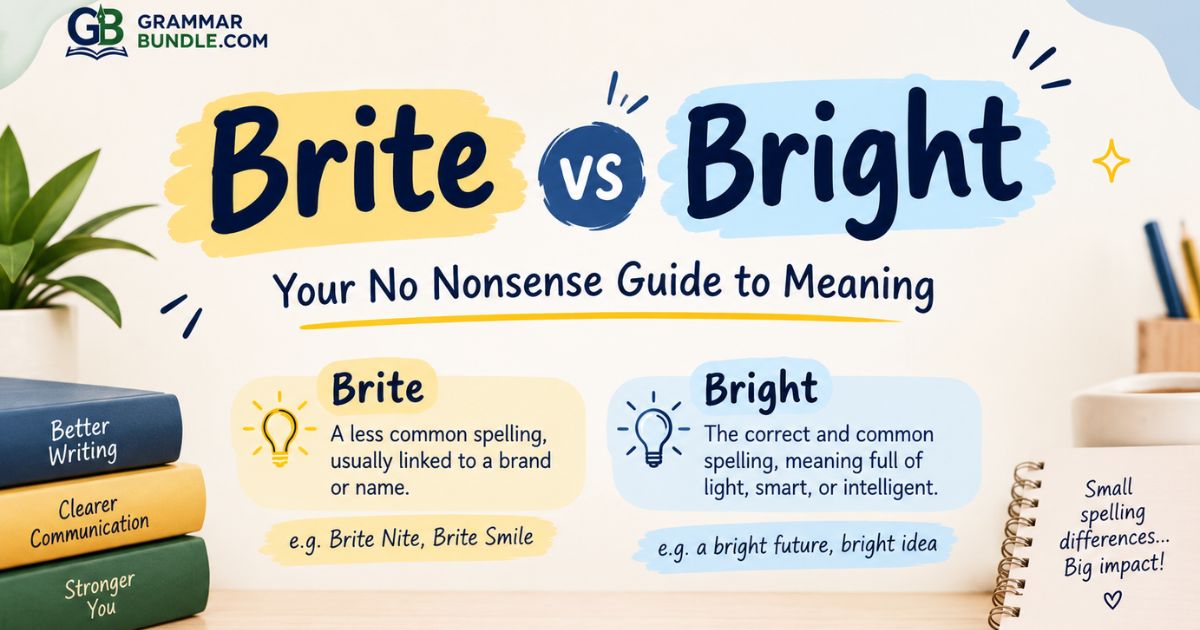
Brite vs Bright can be confusing because both forms appear in modern English. Bright is the standard English word, while Brite is mainly used in brand names, product names, and informal contexts. Understanding their different uses helps you choose the correct form in your writing.
The Main Attraction: Unpacking the Versatile Power of “Bright”
Bright is a versatile English word with a wide range of meanings. It can describe light, colors, intelligence, and even a cheerful or hopeful feeling. Knowing these different uses can help you use bright more accurately in everyday writing.
Understanding the Different Uses of “Bright”
The meaning of bright goes beyond simply describing light. It can refer to illumination, vivid colors, intelligence, and positive emotions. Here are its main uses:
- Light and Illumination: Used for something that gives off or reflects a strong amount of light.
- Example: The bright sun made us squint.
- Example: They installed bright LED lights in the kitchen.
- Vivid Colors: Describes colors that are strong, lively, and noticeable rather than dull.
- Example: She wore a bright yellow dress.
- Example: The artist used bright colors in the painting.
- Intelligence: When used for a person, bright can mean smart, quick-thinking, or able to learn easily.
- Example: He is a bright student who loves mathematics.
- Example: She came up with a bright idea.
- Hope and Positivity:Bright can describe something cheerful, promising, or full of hope.
- Example: She has a bright future ahead.
- Example: His bright smile made everyone happy.
Bright: Synonyms by Meaning
| Use | Alternative Words |
|---|---|
| Light | Shining, radiant, glowing, luminous |
| Color | Vivid, vibrant, bold, colorful |
| Intelligence | Smart, clever, sharp, intelligent |
| Outlook | Hopeful, positive, cheerful, promising |
The word bright has several meanings, so its synonyms can change depending on the context. It remains the standard spelling for formal and everyday English.
The Specialist: Where “Brite” Actually Fits In
The answer is yes, but with a limitation. Brite is not generally considered the standard spelling in formal English. Using it in an essay, academic paper, or professional document may be viewed as a spelling error.
So, why do we still see brite in many places? It is often used as a stylized or shortened spelling, especially in brand names, product names, and advertising. Its purpose is usually to create a modern, catchy, or distinctive impression rather than follow standard spelling rules.

For more helpful spelling tips, explore our guide on related grammar and spelling mistakes
Symptomatology vs Symptomology: Clear Medical Difference
When to Use “Brite” and When to Avoid It
Think of brite as a stylized form that has a limited purpose. It is most suitable for names, branding, and informal communication rather than standard English.
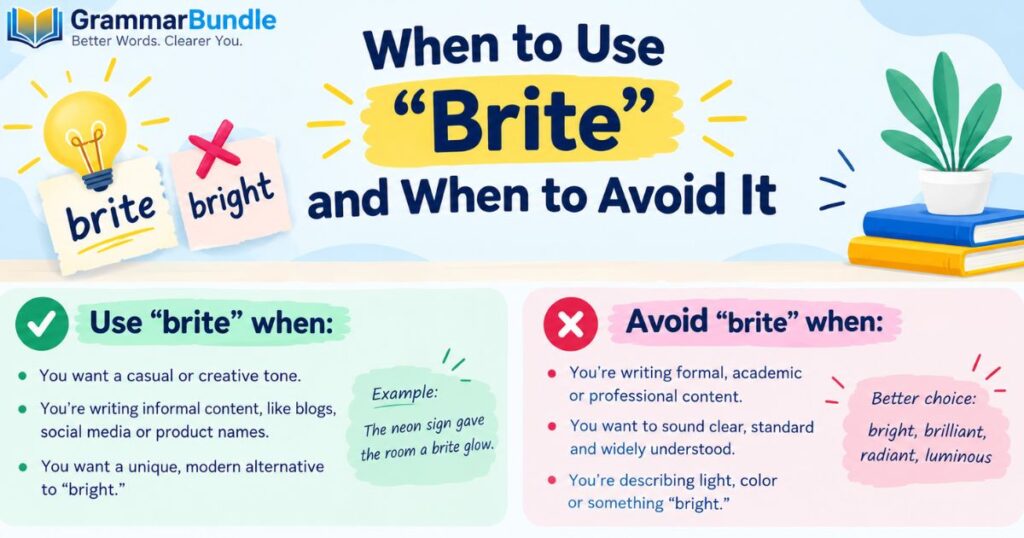
Appropriate Uses of “Brite”:
- Brand Names and Trademarks: Businesses may use brite to create a distinctive, memorable name.
- Example: A product may be called BriteLite.
- Example: A business might use a name such as Brite Nites.
- Informal and Creative Content:Brite may appear in social media posts, advertisements, or casual messages to create a playful or modern tone.
- Example: “Had a brite time tonight! ✨”
When to Avoid “Brite”:
- Formal Writing: Use bright in essays, reports, professional emails, and official documents.
- Clear and Standard Communication: When you simply mean “bright,” the standard spelling bright is the safer choice.
For more helpful spelling tips, explore our guide on related grammar and spelling mistakes. Village vs Subdivision: Helpful Difference Guide
Case Study: How “Lite-Brite” Became a Memorable Name
A discussion of Brite vs Bright would be incomplete without mentioning Lite-Brite, the well-known toy brand. It provides a clear example of how creative spelling can become part of a product’s identity.
- “Lite” is a stylized form of “light,” giving the name a simple and playful feel.
- “Brite” replaces the standard spelling “bright,” helping the brand create a distinctive name.
Together, Lite-Brite creates a catchy and recognizable brand identity, showing how alternative spellings can be effective in marketing and product naming.
Brite vs Bright: A Quick Comparison
| Feature | Bright | Brite |
|---|---|---|
| Word Type | Standard English spelling | Stylized spelling |
| Common Use | Light, color, intelligence, and positive ideas | Brands, products, and creative names |
| Formal Writing | Appropriate | Usually avoided |
| Pronunciation | Same pronunciation | Same pronunciation |
| Example | “She has a bright future.” | “She enjoys using her Lite-Brite.” |
Using “Bright” Correctly in Context
The word bright can be used in many situations. These examples show how its meaning changes depending on the context:
- The bright morning sun filled the room. (Light)
- She found a bright solution to the problem. (Intelligence)
- He wore a bright blue shirt. (Color)
- The children have a bright future ahead. (Positive outlook)
- The bright stars were clearly visible in the night sky. (Scientific context)
In each example, bright is the standard spelling and fits naturally in formal and everyday English.
For more helpful spelling tips, explore our guide on related grammar and spelling mistakes. Channel vs Chanel: Easy Fix for Common Errors
A Brief History of “Bright”
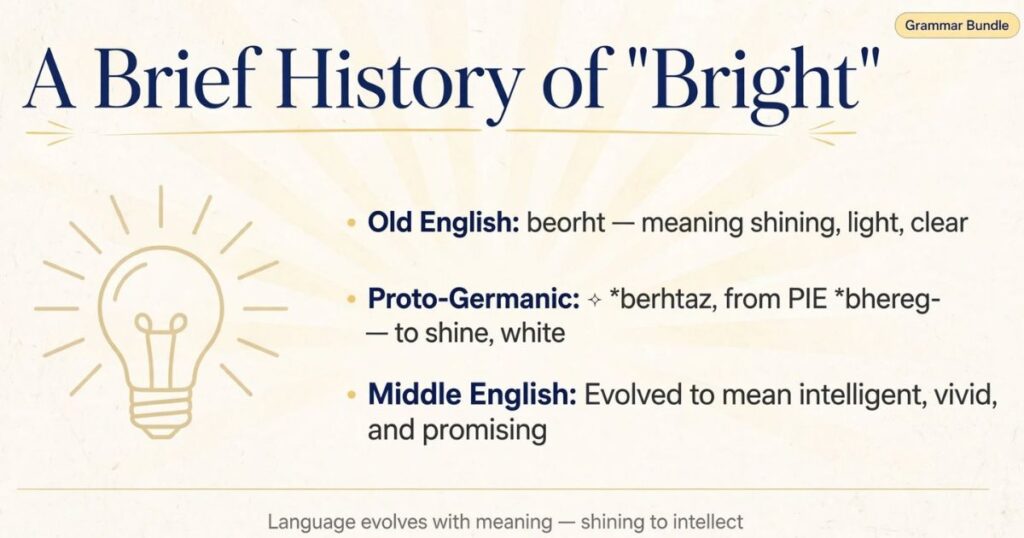
The word bright has a long linguistic history. It comes from the Old English beorht, meaning “shining” or “bright,” and has roots in the wider Germanic language family. Related forms can also be found in older Germanic languages.
Over centuries, bright developed into the standard English spelling we use today. In comparison, brite is a much newer stylized form that became popular mainly through branding and modern commercial use.
For more guidance, explore https://grammarthat.com/brite-vs-bright/
A Simple Rule to Remember Brite vs Bright
The easiest way to avoid confusion is to remember that bright is the standard English spelling, while brite is mainly used for specific names, branding, or creative purposes.
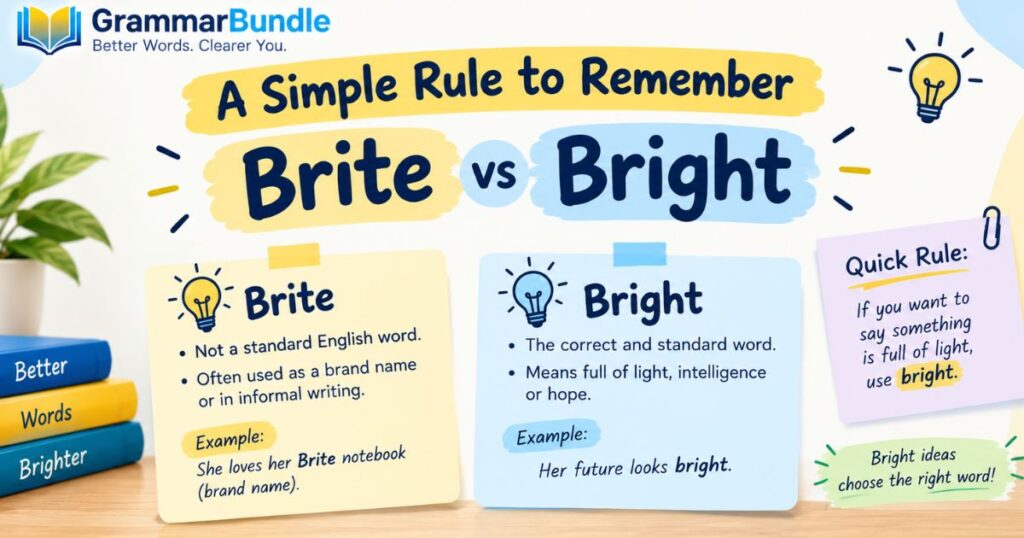
Quick Rule:
Use “bright” in normal and formal writing. Use “brite” only when it appears as part of a brand, product name, or intentional stylized spelling.
When you are unsure, bright is the appropriate choice for standard English.
Memory Tip:
- Think of the “gh” in bright as part of the word that helps you remember its standard spelling.
For more helpful spelling tips, explore our guide on related grammar and spelling mistakes. Busyness vs Business: Clear Differences Explained
Brite vs Bright: Final Takeaway
The difference between brite and bright shows how English can follow standard rules while also allowing creative variations.
- Bright is the standard spelling used for light, vivid colors, intelligence, and positive ideas.
- Brite is mainly found in brand names, product names, advertising, and other informal or stylized uses.
For formal and everyday writing, choose bright. When you see brite, remember that it is usually a deliberate spelling choice rather than the standard form.
FAQs
- Is “Brite” a correct English word?
“Brite” is mainly a stylized spelling used in brand names, products, and creative writing. Bright is the standard English spelling.
2. What is the difference between Brite and Bright?
Bright is the standard word, while Brite is usually a deliberate alternative spelling used for branding or informal purposes.
3. Can I use “Brite” in formal writing
It is better to use bright in essays, reports, professional emails, and other formal writing.
4. What does “bright” mean?
Bright can describe strong light, vivid colors, intelligence, or a hopeful and positive outlook.
5. Do Brite and Bright sound the same?
Yes. Both are generally pronounced the same way, although their spelling and usage are different.
Conclusion
Understanding Brite vs Bright is simple once you know their different uses. Bright is the standard English spelling, while Brite is mainly used for brands and creative names. For clear and formal writing, bright is the right choice.