
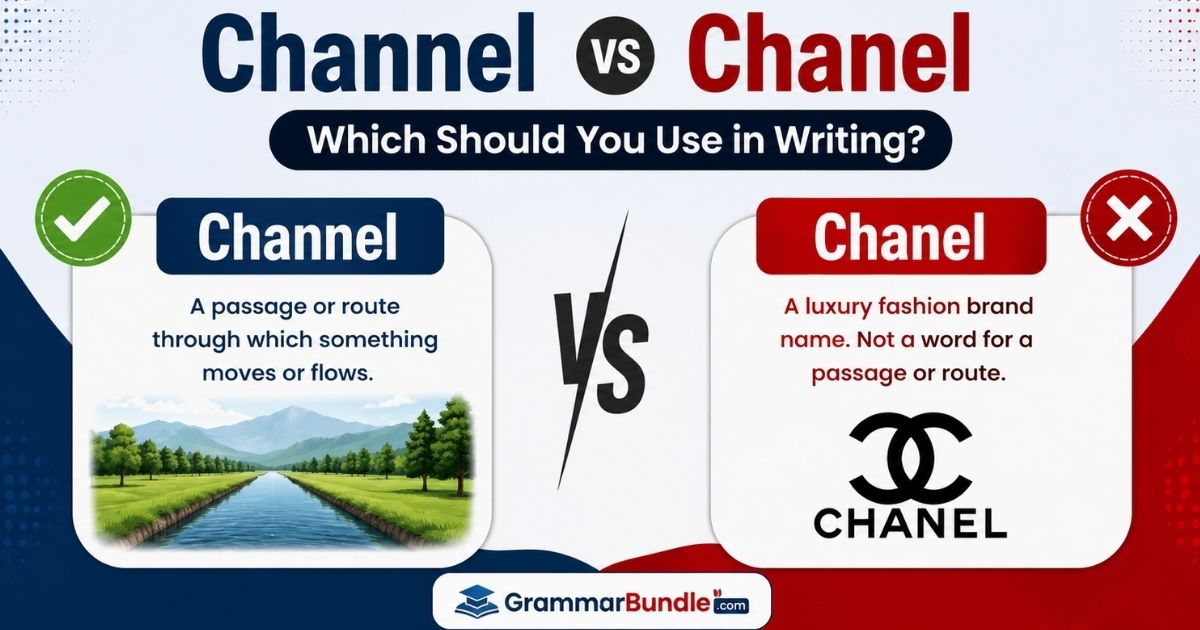
Channel vs Chanel : one tiny letter can lead to big mistakes! Many people unknowingly confuse the two, resulting in miscommunication in both casual conversations and professional settings. Misunderstanding these terms can lead to awkward situations, especially in fashion and media contexts.
What Do “Channel” and “Chanel” Mean?
The words “channel” and “Chanel” may look and sound similar, but they have completely different meanings. One is a common English word, while the other is a proper name connected with fashion.
Channel: Meaning and Usage
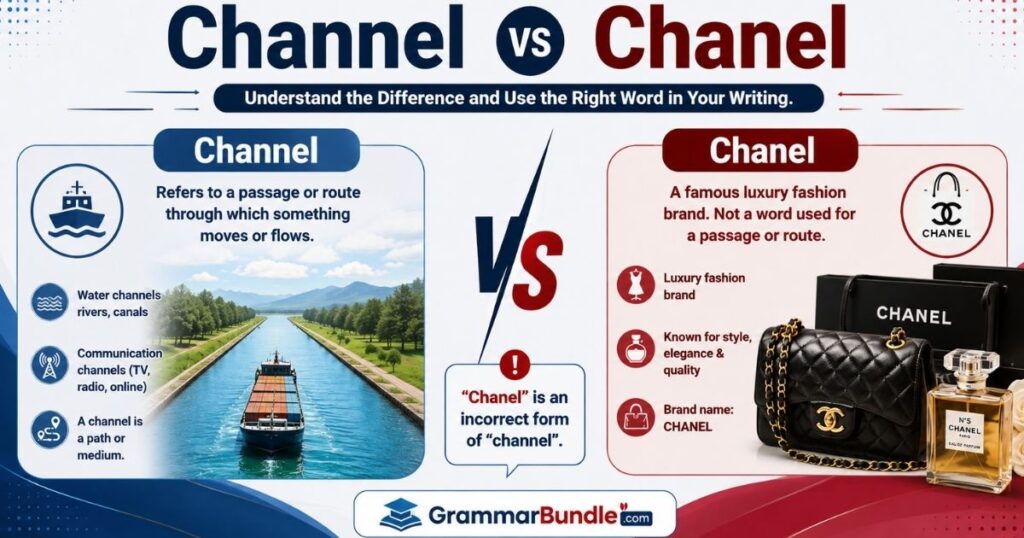
The word “channel” has several meanings in everyday English. It can describe a physical route, such as a river channel, or a communication medium, such as a television channel.
It can also describe a pathway through which information or goods move. In simple terms, a channel provides a route or medium for something to pass through.
Chanel: A Symbol of Luxury
“Chanel” is a proper noun and the name of a famous luxury fashion brand founded by Coco Chanel. It is strongly associated with high fashion, luxury, and timeless style.
The name is connected with well-known products such as Chanel No. 5 and classic fashion designs, making it very different from the everyday word “channel.”
The Easy Difference to Remember
The distinction is simple:
Channel refers to a route, pathway, or medium of communication.
Chanel refers to the luxury fashion brand.
Although the two words look similar, their meanings and uses are completely different.
For more helpful spelling tips, explore our guide on related grammar and spelling mistakes: Loot vs Lute: Meaning, Spelling Pronunciation
What Does “Channel” Really Mean in English?
The word “channel” can have different meanings depending on the context. At its core, it refers to a pathway, route, or medium through which something moves, flows, or is communicated.
Channel as a Physical Path
When channel is used in a physical sense, it refers to a pathway or route that allows movement or flow.
For example:
- A river channel directs water from higher ground to lower ground, while a shipping channel provides a designated route for vessels to navigate safely.
In both cases, the channel acts as a clear path for movement.
Channel in Communication
In communication, a channel is the medium through which a message is shared.
Common examples include:
- Phone calls
- Emails
- Social media posts
- Blogs
For example, a writer may use a blog as a channel to reach an audience. The style and tone can change depending on the communication channel being used.
For more useful English tips, explore trusted grammar resources : https://grammarcharm.com/channel-vs-chanel/
Channel in Digital Marketing
In digital marketing, channels are the platforms or methods businesses use to reach customers.
These may include:
- Social media
- Email newsletters
- Websites
- Search engines
Each channel can have a different audience and strategy. For example, marketers may use Instagram as a visual channel to connect with audiences through images and stories.
Channel in Broadcasting
In broadcasting, a channel refers to a specific frequency or platform through which content is transmitted.
Television and radio stations are common examples. When someone tunes into a particular TV channel for a news program, they are accessing a specific source of broadcast content.
Different channels may focus on different types of content and audiences.
Channel as a Verb
As a verb, channel means to direct energy, focus, or emotions toward a particular purpose.
For example:
- An artist may channel their emotions into a painting.
- Someone may channel their energy into creative work.
Here, the word describes the process of directing something abstract toward a specific outcome.
Channel in Electronics
In electronics, a channel refers to a pathway through which signals or data travel.
For example
- Audio equipment can have different channels that manage sound from different sources. In this context, a channel acts as a route that helps signals move and communicate effectively.
The Common Idea Behind “Channel”
Although channel is used in many different fields, the basic idea remains the same: a channel provides a route, pathway, or medium through which something moves or is communicated.
For more helpful spelling tips, explore our guide on related grammar and spelling mistakes: Noteable or Notable? Easy & Helpful Guide
What Does “Chanel” Actually Mean?
Chanel is not a general English word. It is a proper name associated with a famous French luxury fashion house founded by Coco Chanel.
Chanel as a Luxury Brand
Chanel is widely known for its luxury fashion and elegant designs. Founded in Paris by Coco Chanel, the brand has become well known for clothing, handbags, perfumes, jewelry, and cosmetics.
Products such as Chanel No. 5 and the classic quilted handbag have become recognizable symbols of luxury and style. The brand combines traditional elegance with modern fashion, making it one of the most well-known names in the fashion industry.
Coco Chanel and Her Influence
Coco Chanel had a major influence on modern fashion. She introduced clothing that combined comfort with elegance and helped move fashion away from restrictive styles.
Her minimalist approach also contributed to the popularity of the little black dress, which became a lasting fashion classic. Her ideas about simple, elegant design continue to influence fashion today.
The Simple Meaning of “Chanel”
In simple terms, Chanel refers to the luxury fashion brand, not a general English word. Unlike “channel,” its meaning does not change depending on the context.
Channel vs Chanel Spelling and Grammar
The words “channel” and “Chanel” can easily confuse writers because they look and sound very similar. However, their spelling, meaning, and grammatical use are different.
Channel vs Chanel Spelling: Why It Trips People Up
The main spelling difference is simple. Channel has two n’s, while Chanel has only one.
This small difference is easy to miss, especially when writing quickly. The two words also appear in very different contexts. Channel can refer to a communication pathway or a body of water, while Chanel refers to the well-known luxury fashion brand.
A quick way to remember it is:
- Channel → two n’s
- Chanel → one n
Chanel vs Channel Grammar: Why Capitalization Matters
Their grammatical roles are also different.
Channel can be used as both a noun and a verb:
- “I changed the TV channel.”
- “She channeled her energy into writing.”
Chanel, however, is a proper noun and the name of a brand. It should always begin with a capital C.
For example:
- “We found a useful channel for communication.”
- “She wore a Chanel dress.”
The capitalization and context make the difference clear. Channel belongs to everyday English, while Chanel refers to the fashion brand.
For more helpful spelling tips, explore our guide on related grammar and spelling mistakes: Implicit vs Complicit Clear Differences Explained
When to Use “Channel” vs “Chanel” in Writing
Knowing when to use “channel” and “Chanel” helps keep your writing clear and accurate. Although the two words look similar, they are used in completely different contexts.
When to Use “Channel”
Use channel when referring to a medium, route, or way through which something moves or is communicated.
It can describe:
- A communication or marketing medium
- A TV or broadcasting station
- A waterway, such as the English Channel
- The direction of thoughts, emotions, or creativity
For example:
- “The company uses multiple channels to reach its audience.”
- “She decided to channel her creativity into blogging.”
In each case, channel describes a route, medium, or direction.
When to Use “Chanel”
Use Chanel when referring to the luxury fashion brand founded by Coco Chanel or its products.
For example:
- “I love the elegance of Chanel handbags.”
- “Coco Chanel changed the world of women’s fashion.”
Whether you are talking about Chanel clothing, perfumes, handbags, or the designer herself, the spelling should always be Chanel.
The Simple Rule
Remember it this way:
Channel = a route, medium, or direction
Chanel = the luxury fashion brand
Checking the context before choosing the word can help you avoid this common spelling mistake.
For more helpful spelling tips, explore our guide on related grammar and spelling mistakes: Ingage vs Engage Stop Confusing These Two Words Today
Channel vs Chanel Examples in Sentences
Seeing “channel” and “Chanel” in real sentences makes their difference much easier to understand. Although they sound similar, they have completely different meanings and uses.
Channel in Real Use
Channel can describe directing energy or effort toward a particular purpose. It can also refer to a platform that broadcasts content.
For example:
- “During the storm, we decided to channel our energy into building a stronger shelter.”
- “The television channel offers a variety of documentaries.”
In the first sentence, channel means to direct energy or effort. In the second, it refers to a broadcasting platform.
Chanel in Real Use
Chanel refers to the well-known luxury fashion brand and its products.
For example:
- “She wore a stunning Chanel dress to the gala.”
- “His Chanel handbag is a timeless investment.”
Here, Chanel represents the fashion brand and its association with luxury and style.
Common Mistakes Writers Make
Writers often confuse these words because they sound very similar. A common mistake is using “Channel” when referring to the fashion brand.
For example:
- Incorrect: “She bought a Channel handbag.”
- Correct: “She bought a Chanel handbag.”
Remember that Chanel should always be capitalized because it is a proper brand name.
Why People Confuse Channel and Chanel
The confusion mainly comes from their similar pronunciation and appearance. Since channel is commonly used in communication, media, and everyday English, it can easily get mixed up with Chanel, especially when people are writing quickly.
The two words may also seem connected because both can relate to ideas of influence—channel can describe a medium that carries information, while Chanel is strongly associated with fashion and style.
The easiest solution is to focus on the context: channel refers to a route, medium, or direction, while Chanel refers to the luxury fashion brand.
For more helpful spelling tips, explore our guide on related grammar and spelling mistakes: Contractor vs Contracter: Avoid This Common Mistake
Easy Way to Remember the Difference
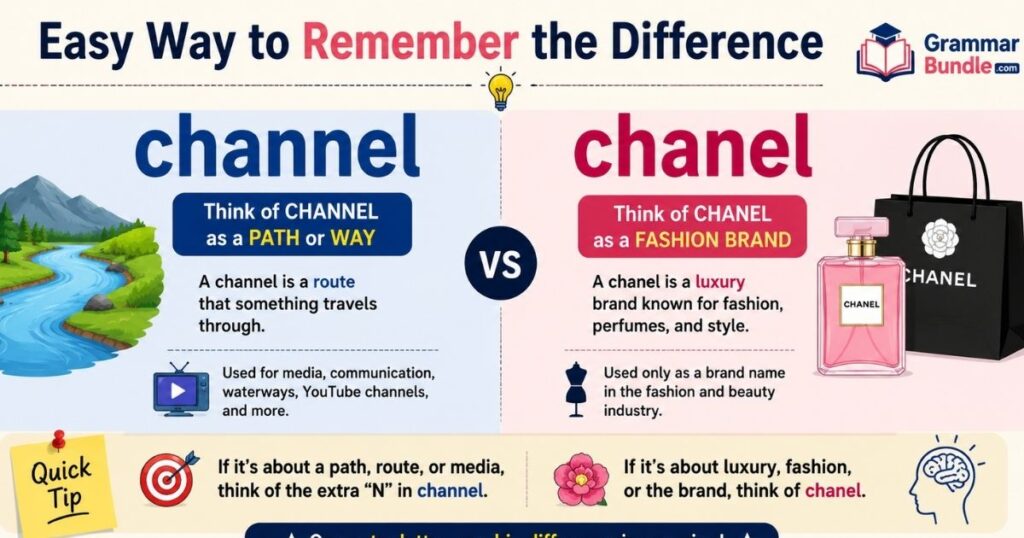
Remembering the difference between “channel” and “Chanel” becomes easier when you connect their spelling with their meanings.
Channel: Two “n”s
Channel has two n’s. You can connect the word with the idea of a pathway or flow, such as water moving through a river or information moving through a communication channel.
Think of it this way:
Channel → two n’s → flow or pathway
Chanel: One “n”
Chanel has only one n and refers to the luxury fashion brand. You can connect it with fashion, elegance, and couture.
Think of it this way:
Chanel → one n → fashion and style
A Quick Memory Rule
The easiest rule to remember is:
Two n’s = a flowing path → Channel
One n = chic style → Chanel
This simple connection can help you remember both the spelling and meaning whenever you use these words in writing.
FAQs
- What is the difference between “channel” and “Chanel”?
Ans: “Channel” refers to a medium for communication or a waterway, while “Chanel” is a luxury fashion brand founded by Coco Chanel.
2. How do you pronounce “channel” and “Chanel”?
Ans: “Channel” is pronounced as /ˈtʃæn.əl/, and “Chanel” is pronounced as /ʃəˈnɛl/.
3. When should I capitalize “Chanel”?
Ans: Always capitalize “Chanel” when referring to the brand, as it is a proper noun. “Channel,” as a common noun, is not capitalized unless it starts a sentence.
4. Can “channel” be used in different contexts?
Ans: Yes, “channel” can refer to communication methods, TV channels, or even pathways in a physical context like rivers.
5. Is there a common confusion between “channel” and “Chanel”?
Ans: Yes, people sometimes mix them up due to their similar sounds, but they have very different meanings and uses.
6. When is it appropriate to use “channel”?
Ans: Use “channel” when discussing media, broadcasting, or describing pathways and methods of communication.
7. Is “Chanel” ever used outside of fashion context?
Ans: Generally, “Chanel” primarily relates to the fashion brand, though it can sometimes refer to its founder or connotations of luxury.
8. How can I remember the difference between “channel” and “Chanel”?
Ans: Think of “channel” as something that transmits information and “Chanel” as a brand representing elegance and style to help distinguish the two.
Conclusion
Channel and Chanel may look similar, but their meanings are different. Channel means a route, medium, or pathway, while Chanel refers to the luxury fashion brand. Remember: channel = pathway, Chanel = fashion. This simple rule can help you avoid common spelling mistakes.