
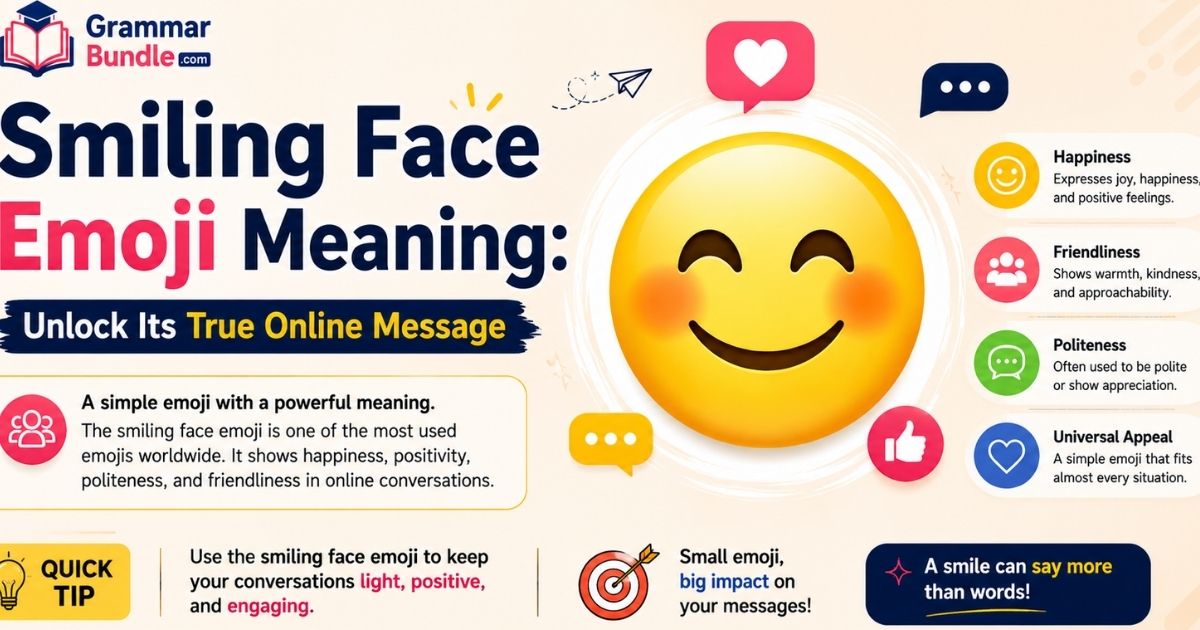
Smiling Face Emoji Meaning: A Simple Guide unveils the hidden depths behind one of the most popular symbols in digital communication. While many see it as just a cheerful symbol, its interpretations can vary widely across different contexts and cultures. Understanding these meanings is crucial for effective communication in our increasingly digital interactions.
😊 Smiling Face Emoji Meaning in Digital Communication
The smiling face emoji is a powerful tool in digital communication, bringing warmth and positivity to conversations.
It can transform a simple message into one filled with friendliness and approachability.
People use it widely, from casual chats to professional settings, making it a universal symbol of goodwill.
When you send this emoji, you’re often conveying the following feelings:
- Joy: It expresses genuine happiness and can brighten someone’s day.
- Friendliness: A simple smile can soften a message and create a welcoming tone.
- Support: Used in conversations, it shows empathy and understanding, making interactions feel more personal.
- Conveys Emotion: It helps express feelings that text alone might not convey.
- Builds Rapport: A smile can break the ice and make interactions feel more personal.
- Versatile Use: It fits various contexts, whether you’re sharing good news or just saying hello.
In a world where misunderstandings can easily arise from a lack of tone, the smiling face emoji acts as a bridge, fostering connection and understanding.
Its widespread use not only brightens conversations but also reflects a shared human desire for positivity and kindness.
Explore our related articles for additional insights and practical language guidance: Village vs Subdivision: Helpful Difference Guide
😊 Smiling Face Emoji Meaning in Everyday Chats
The 😊 Smiling Face emoji usually expresses warmth, friendliness, happiness, or gentle positivity. Its exact meaning can change depending on the conversation and the relationship between the people chatting.
😊 Showing happiness
You can use the emoji when you’re genuinely happy about something.
Example:
“I finally finished my assignment 😊”
Here, 😊 shows satisfaction and happiness.
😊 Being friendly and polite
The emoji can make a simple message sound warmer and more welcoming.
Example:
“Thanks for helping me today 😊”
It adds a friendly tone to the message.
😊 Responding positively
Sometimes, people use 😊 as a simple way to show that they appreciate or agree with something.
Example:
“That sounds like a great idea 😊”
The emoji reinforces the positive response.
😊 Showing gratitude
It can make a thank-you message feel more sincere and pleasant.
Example:
“Thank you so much for remembering my birthday 😊”
😊 Expressing gentle excitement
The emoji can also show quiet excitement without making the message seem overly enthusiastic.
Example:
“I’m looking forward to seeing you tomorrow 😊”
😊 Making a message feel less serious
A short text can sometimes sound cold or formal. Adding 😊 can soften it.
Example:
“Okay, I’ll send it tonight 😊”
Without the emoji, the message may sound more direct. With it, the tone feels friendlier.
😊 Meaning can depend on context
The same emoji can communicate different feelings depending on the words around it.
Example 1:
“That’s wonderful news 😊”
Meaning: Genuine happiness.
Example 2:
“Sure, no problem 😊”
Meaning: Friendly and agreeable.
Example 3:
“I guess that’s fine 😊”
Meaning: It could suggest a softer or slightly uncertain tone, depending on the conversation.
Explore our related articles for additional insights and practical language guidance: Seal vs Seel: Simple Guide to the Right Spelling
Final takeaway
In everyday chats, 😊 generally communicates friendliness, warmth, happiness, appreciation, and positivity. Always consider the surrounding words and conversation because the emoji’s tone can change with context.
😊 The Basic Emotion Behind the Smiling Face Emoji
The 😊 Smiling Face emoji is all about creating a warm and pleasant feeling in a conversation. It usually shows a gentle smile rather than loud excitement or extreme happiness.
A Warm Way to Respond
Sometimes, you want your reply to sound kind without saying too much. 😊 can add that warmth instantly.
Example:
“Thank you for checking on me 😊”
A Sign of Simple Happiness
When something makes you feel good, 😊 can express that quiet sense of happiness.
Example:
“I finally completed my project 😊”
A Friendly Conversation Starter
The emoji can make a message feel more welcoming, especially when you’re talking casually with someone.
Example:
“How has your day been? 😊”
A Softer Tone
A message without an emoji may sound direct. Adding 😊 can make the same words feel more relaxed and friendly.
Example:
“Sure, I can help you with that 😊”
A Little Positivity Goes a Long Way
You don’t always need a long explanation to show a positive attitude. Sometimes, a simple 😊 is enough to make your message feel cheerful.
Example:
“Everything worked out in the end 😊”
What 😊 Really Expresses
The emotion behind 😊 is usually gentle happiness mixed with warmth and friendliness. Its meaning can shift with the situation, but it generally makes a conversation feel more positive and approachable.
For further reference, consult this source for additional information: https://heartmeaning.com/smiley-face-emoji-meaning/
😊 When the Smiling Face Emoji Feels Polite but Distant
Sometimes 😊 adds politeness without showing strong emotion. Its tone depends more on the message and context than on the emoji itself.
A Short Reply
“Okay, thanks 😊” can sound friendly, but also brief and somewhat reserved.
A Polite Response
“Sure, I’ll let you know 😊” keeps the conversation pleasant without sounding overly personal.
A Formal Interaction
“Thank you for your help 😊” may simply show courtesy, especially in a formal or unfamiliar conversation.
Context Matters
If someone usually sends detailed messages but suddenly replies with “Sure 😊,” the short response may feel distant. Still, one emoji alone doesn’t tell you exactly what someone feels.
Explore our related articles for additional insights and practical language guidance: Sleave or Sleeve? Helpful Spelling Guide
😊 When the Smiling Face Emoji Feels Passive or Passive-Aggressive
The 😊 emoji doesn’t always feel cheerful. In some situations, it can make a message sound forced, overly polite, or slightly uncomfortable.
When the Words Sound Cold
Take this message:
“Fine, do whatever you want 😊”
The smile doesn’t make the sentence feel genuinely happy. Instead, it may suggest that the person isn’t completely pleased.
When It Follows Criticism
Adding 😊 after a sharp comment can create an awkward contrast.
“You could have told me earlier 😊”
Here, the emoji may make the criticism sound softer, but the underlying message is still negative.
When Someone Is Hiding Annoyance
Sometimes people use 😊 to keep their frustration from sounding too obvious.
“No worries, it’s completely fine 😊”
Depending on the conversation, this might be sincere or could suggest that something actually is bothering them.
Look at the Whole Message
In short, 😊 can feel passive-aggressive when the words say one thing but the overall tone seems to suggest another.
😊 Smiling Face Emoji vs Other Smile Emojis
Smile emojis may look similar, but each one can give a message a different emotional tone. Here’s a quick comparison:
| Emoji | Common Meaning | Typical Tone |
|---|---|---|
| 😊 | Warmth, gentle happiness, friendliness | Warm & sincere |
| 🙂 | Simple happiness or acknowledgment | Neutral & calm |
| 😄 | Cheerfulness and excitement | Happy & energetic |
| 😃 | Open happiness and enthusiasm | Cheerful & upbeat |
| 😁 | Big smile, excitement, satisfaction | Playful & enthusiastic |
| 😆 | Strong amusement or laughter | Funny & energetic |
| 😅 | Relief, nervousness, or awkward humor | Awkward & lighthearted |
| 😂 | Finding something extremely funny | Very humorous |
| 🤣 | Intense laughter | Extremely playful |
| 😉 | Playfulness, teasing, or a hint | Witty & suggestive |
😊 Hidden Meanings Behind the Smiling Face Emoji
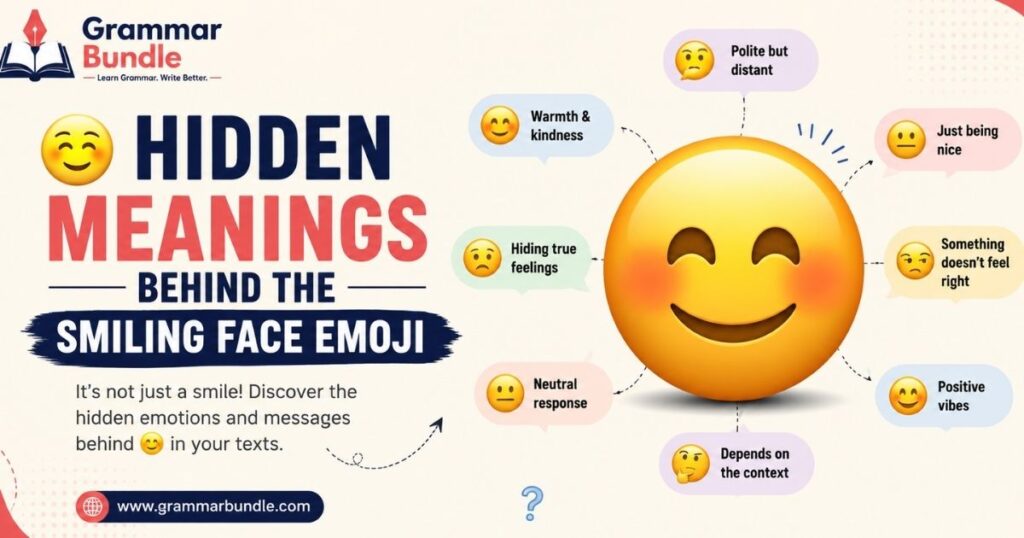
The smiling face emoji 😊 often brings joy, but its meanings can shift depending on the context. Here are some hidden nuances:
- Positive Vibes: Represents happiness, warmth, and friendliness.
- Supportive: Used to uplift others in tough times, showing solidarity.
- Politeness: Softens messages, making them feel more pleasant and approachable.
Conversely, the smiling face emoji can also mask deeper feelings.
- Sarcasm: Sometimes, it’s a cover for sarcasm or passive aggression.
- Discomfort: Can imply forced happiness, concealing true emotions.
- Dismissiveness: May downplay serious topics, signaling someone isn’t fully engaged.
Understanding both sides of the smiling face emoji can enhance our communication, revealing layers beneath that simple grin.
😊 How Context Changes Smiling Face Emoji Meaning
Joyful Celebration 🎉
In the context of a party, the smiling face emoji represents genuine happiness.
It becomes a symbol of shared joy, enhancing the excitement among friends celebrating milestones or achievements.
Supportive Message 🤝
When used to comfort a friend, the smiling face emoji shows warmth and empathy.
It bridges the gap in conversations and expresses understanding, making it easier to convey support during tough times.
Sarcasm Alert 😏
In a teasing context, the smiling face can indicate sarcasm or playful irony.
It adds a cheeky layer to conversations, leaving recipients questioning the actual sentiment behind the smile.
Emoji Overload 💬
In lengthy text threads, this emoji might feel out of place.
When used excessively, it can dilute its meaning, transforming heartfelt gestures into mere filler, making the conversation feel less personal.
Professional Politeness 🏢
In business emails, a simple smiling face can soften the tone.
It shows friendliness and approachability, making interactions feel less formal while still maintaining a professional demeanor.
😊 Smiling Face Emoji in Group Chats
The 😊 emoji can brighten up any conversation. It’s more than just a smile; it conveys warmth and friendship.
- Creates a Positive Vibe: Users often respond more openly when they see a smiling face.
- Encourages Engagement: This emoji invites others to join the fun.
In a world of text-only communication, a simple smile can foster connection. It helps to soften disagreements or lighten heavy topics, making discussions feel more friendly and inclusive.
😊 Smiling Face Emoji in Romantic Conversations
The 😊 Smiling Face emoji carries warmth and positivity, enhancing romantic chats. Its simplicity can convey feelings that words often struggle to express.
- Warm Connection: It bridges emotional gaps, offering a sense of closeness.
- Friendly Vibe: Adds light-heartedness, making conversations feel more playful.
- Encouraging Tone: Perfect for reassuring your partner and keeping the dialogue uplifting.
Using this emoji can transform a standard text into something special, sparking deeper connections and smiles all around. It’s a small touch with a big impact.
The Power of a Smile in Professional Communication
In professional settings, the 😊 Smiling Face emoji can serve as a subtle but effective tool for enhancing communication.
It reflects positivity and can help convey warmth in a digital landscape often dominated by text.
- Adds a personal touch to your messages.
- Breaks the ice in formal conversations.
- Reduces misunderstandings by conveying friendliness.
- Encourages a collaborative atmosphere.
- Helps to humanize your brand or persona.
- Can evoke a sense of approachability.
Using the 😊 emoji thoughtfully can uplift team morale and make difficult conversations feel a bit lighter.
It encourages a more relaxed tone, making colleagues feel valued and appreciated, ultimately leading to better teamwork and collaboration. Remember, a smile — even a digital one — can go a long way in fostering positive relationships.
😊 Misunderstandings Around the Smiling Face Emoji
The 😊 emoji looks simple, but it doesn’t always communicate the same feeling. People can misunderstand it when they focus on the emoji instead of the words and context around it.
“It Always Means Happiness”
Not necessarily. 😊 can also suggest friendliness, politeness, appreciation, or a softer tone.
Example:
“Thanks for letting me know 😊”
Here, it expresses appreciation more than excitement.
“It Means the Person Is Being Fake”
A smile can sometimes feel forced, but that doesn’t mean the sender is pretending. Some people naturally use 😊 to make their messages sound warmer.
“It Is Always Friendly”
Most of the time, yes. But in a message like “That’s great 😊”, the meaning can depend on what was said before it. The same emoji may feel sincere in one conversation and slightly awkward in another.
“The Emoji Has One Fixed Meaning”
This is one of the biggest misunderstandings. 😊 doesn’t have a secret meaning that applies to every message.
Its interpretation can change with:
- The wording
- The situation
- The relationship between the people
- The overall tone of the conversation
The Better Way to Understand 😊
Don’t judge the emoji on its own. Read the complete message first, then consider how 😊 supports or changes the tone. That gives you a much clearer idea of what the sender may be trying to communicate.
The Dual Nature of 😊
The smiling face emoji 😊 is often seen as a cheerful symbol, but its meaning can vary widely based on context. While many use it to express happiness, others might interpret it differently.
- Genuine Joy: It can represent true happiness or excitement in conversation.
- Sarcasm or Irony: In some scenarios, a smiling face might mask sarcasm, making the message more complex.
Cultural Interpretations 🌍
Emojis can carry different meanings across cultures, adding another layer of misunderstanding.
- Casual Greetings: In some cultures, it’s a friendly hello.
- Formal Contexts: Conversely, using it in business communication may come across as too casual.
😊 Psychological Impact of the Smiling Face Emoji
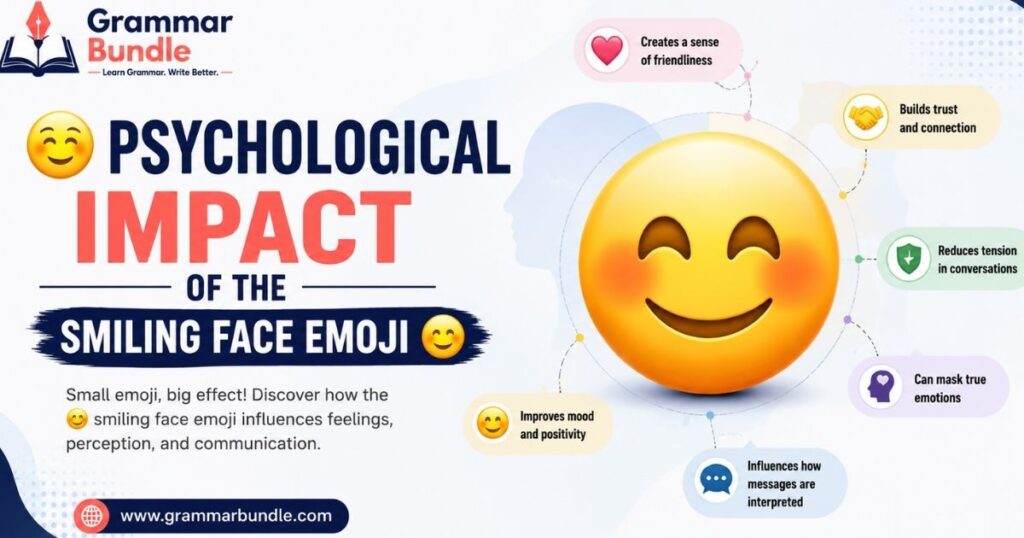
The smiling face emoji is more than just a cute icon; it carries deep psychological significance. When we share this emoji, we’re tapping into a universal language of positivity and warmth.
- Boosts Mood: Studies show that seeing or using a smiling emoji can elevate our spirits. It creates a ripple effect, spreading happiness among those who encounter it.
- Strengthens Connections: Virtual conversations often lack the warmth of face-to-face interactions. A simple 😊 can bridge that gap, making messages feel friendlier and more affectionate.
The Ripple Effect of Positivity 🌊
The impact of sharing a smiling face emoji can extend far beyond personal feelings.
- Encourages Kindness: A positive vibe can inspire others to pass it on. One smile can lead to a chain reaction of goodwill.
- Enhances Communication: It softens the tone of our messages. In the digital world, this can lead to clearer, more empathetic exchanges.
Using a smiling face emoji is a small act that fosters connection and positivity, reminding us of the simple yet powerful impact of a smile. 😊
The Smiling Emoji Across Generations 😊
Different generations interpret the smiling emoji quite uniquely. Here’s how:
Baby Boomers (1946-1964):
Often see it as a genuine smile.
- Focus on warmth and sincerity.
- Use it for friendly interactions in emails or texts.
Generation X (1965-1980):
May view it as casual yet polite.
- Incorporates it in professional communications.
- Values a friendly tone without being overly familiar.
Millennials (1981-1996):
Use it in playful or sarcastic ways.
- More likely to mix emojis for effect, e.g., 😏😊.
- Share it on social media with a humorous twist.
Gen Z (1997-2012):
Interpret it with skepticism.
- Might think it’s too basic; prefer more expressive emojis like 😜 or 😅.
- Use it ironically or to convey a sense of awkwardness.
A Modern Example
Consider a group chat where a Baby Boomer uses 😊 to express gratitude after a family gathering. In contrast, a Gen Z participant might reply with a 🙃 to evoke a lighthearted mood while subtly hinting at their feelings about the event.
Understanding these differences enriches our communication and can improve connections across age groups. The smiling emoji isn’t just a simple icon; it’s a bridge between generations, each giving it a unique flavor.
😊 Cultural Differences in Meaning
Warmth vs. Sarcasm
In some cultures, the smiling emoji conveys warmth and friendliness. For example, in many Western countries, it’s often used to express happiness or greet friends.
However, in other contexts, like in some Asian cultures, it might be seen as sarcastic or even dismissive. A simple smile can carry layers of meaning.
Professional Contexts
Business Friendly: In the United States, using a smiling emoji in a work email can suggest approachability.
Formal Dismissal: In Japan, it might come across as unprofessional or too casual, signaling a lack of seriousness in dealings.
Emotional Nuance
The smiling emoji can also represent different emotions.
Joyful Moment: Celebrating a friend’s achievement. 🎉
Nervous Laughter: Used when joking about an awkward situation. 😅
Emojis, especially the smiling one, play a crucial role in bridging or widening the cultural gap. Understanding these differences can make communication more effective and enjoyable.
😊 Why People Keep Using the Smiling Face Emoji
- The smiling face emoji is universal, transcending language barriers.
- It’s a quick way to express joy that everyone understands, making it a favorite in digital conversations.
- This emoji often adds warmth to messages.
- It transforms a simple text into something more friendly and inviting, softening the tone of even the most serious discussions.
- People love using it to convey sarcasm or irony.
- A well-placed smiling face can turn a potentially negative comment into something light-hearted, helping the sender navigate tricky topics with ease.
- It enhances emotional connection.
- Using the smiling face emoji shows enthusiasm and positivity, making interactions feel more personal and engaging.
- Finally, it’s just plain fun! Emojis, especially the smiling face, bring a playful element to communication, reminding us not to take every conversation too seriously.
😊 When Not to Use the Smiling Face Emoji
Using the smiling face emoji can add warmth to a conversation, but there are times when it just doesn’t fit. Awareness of context is key to communication, especially in written form.
- Serious topics require earnestness.
“I’m truly sorry for your loss.” - Apologies need a sincere tone.
“I messed up your order. 😞” - Disagreements call for a serious approach.
“I disagree with your viewpoint.” - Sad news deserves sensitivity.
“It’s unfortunate that you’re unwell.” - Professional settings require formality.
“The project deadline is approaching.”
Sometimes, using a smiling emoji can distract from your message. This can lead to misunderstandings, where the mood of your message gets lost.
Instead, opt for clarity and appropriateness — everyone appreciates a well-placed tone in communication. Consistency is key, and being mindful of your audience will enhance your relationships.
😊 How to Use the Smiling Face Emoji Better
Elevate Your Conversations
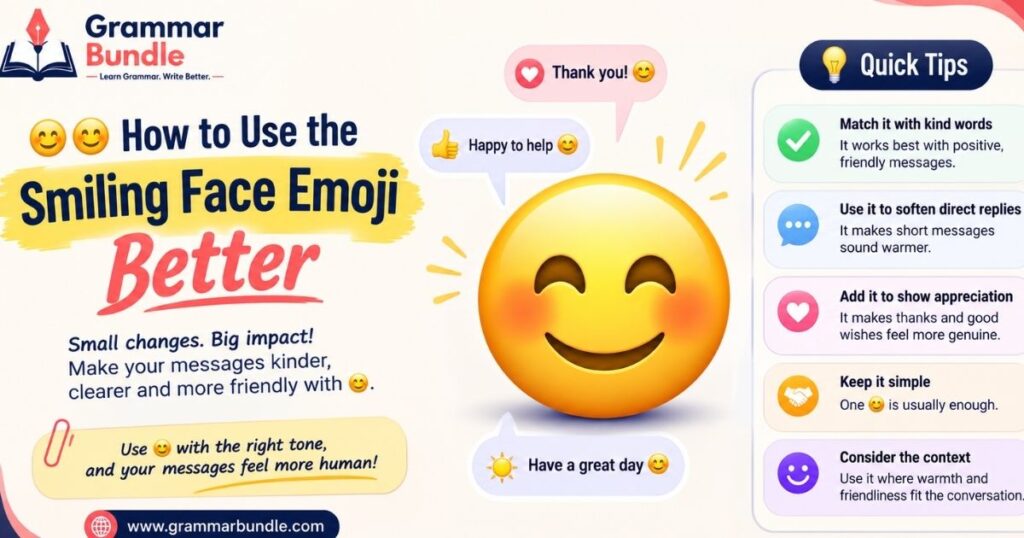
Using the smiling face emoji can enhance your messages, adding warmth and friendliness. It’s not just about adding a smile; it’s about creating connection and tone.
- Brighten someone’s tough day.
- Show appreciation for a friend.
- Replace dull statements with joy.
- Make requests sound more polite.
- Celebrate achievements, big or small.
For example, instead of just saying, “Great job,” you could say, “Great job! 😊” This small addition transforms your message, making it feel more genuine and supportive.
Create a Positive Vibe
The smiling emoji can also lighten the mood in serious discussions. Sprinkle it into your texts to soften your tone and show you’re approachable.
- Lighten up serious conversations.
- Encourage a collaborative atmosphere.
- Compliment without sounding awkward.
- End messages on a happy note.
- Share laughter with friends often.
Consider this: “Let’s discuss the project. 😊” This shifts the focus, showing you care about teamwork while keeping it positive.
By mastering the art of the smiling face emoji, you’ll create conversations filled with kindness and warmth.
😊 Evolution of the Smiling Face Emoji
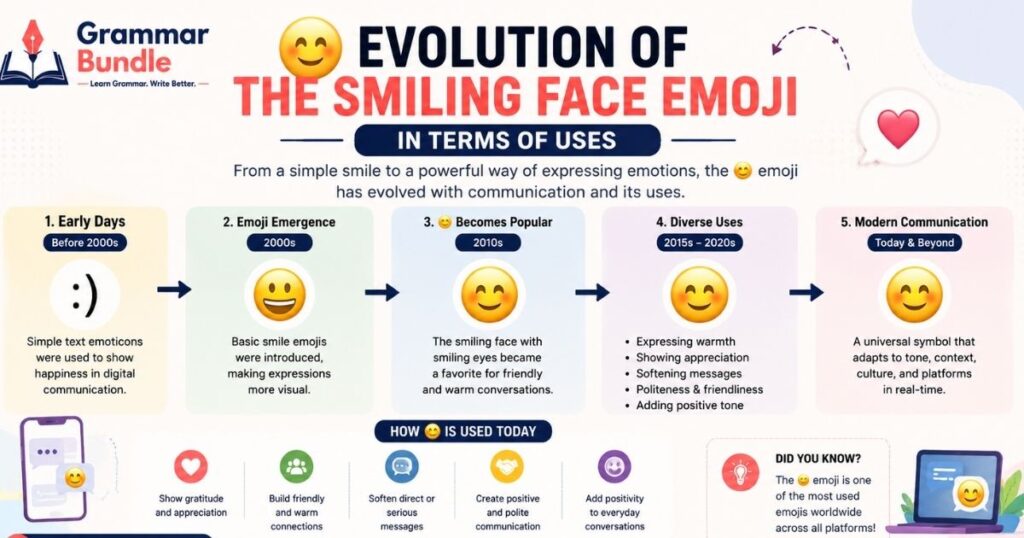
The Early Days
- First emoji creation: 1999 by Shigetaka Kurita.
- Simple design: Basic, pixelated character.
- Limited color palette: A few colors only.
- Smiling face meaning: Expressed happiness simply.
Evolution Over Time
- Diverse styles emerge: Many platforms adapt.
- Increased color variety: More shades introduced.
- Cultural significance grows: Represents universal joy.
- New options added: Variations for skin tones.
Modern Usage
- Online presence: Found everywhere, daily.
- Emotional depth added: Conveys more than happiness.
- Social media essential: Enhances communication fluidity.
- Creative interpretations flourish: Personalized for unique expressions.
😊 Smiling Face Emoji in Messaging Apps
Connection Catalyst:
The emoji acts as a digital handshake, fostering a sense of connection. Even when words fail, a smile can bridge the gap, making conversations relatable and personal.
Emotional Tone:
The 😊 smiling face emoji softens messages, making them feel friendly and warm. In a work chat, it conveys approachability, whereas in a personal chat, it enhances affection.
App Variations:
Different messaging apps sometimes alter how emojis look, which subtly shifts the message’s vibe. For instance, the same smiling face might appear cartoonish on one app and more realistic on another.
Cultural Perceptions:
In some cultures, a simple smile can symbolize politeness, while in others, it might come off as insincere. This cultural lens affects how the emoji is interpreted.
Amplifying Tone:
Adding the 😊 emoji to a compliment can amplify its sincerity. A straightforward “Great job!” feels warmer with the emoji, encouraging positive interactions.
FAQs
- What does the smiling face emoji mean?
Ans: The smiling face emoji generally represents happiness, positivity, and friendliness. - Can I use the smiling face emoji in serious conversations?
Ans: While it’s mostly for light-hearted chats, you can use it in serious talks to show warmth, but use it wisely. - Is there a difference between the regular smiling face and other smiling emojis?
Ans: Yes! Other smiling emojis can show different feelings, like joy, excitement, or even cheekiness, depending on their extra features like eyes or mouths. - When should I avoid using the smiling face emoji?
Ans: It’s best to avoid it in very serious or sad situations where a light-hearted tone may come off as insensitive. - How do people feel about receiving the smiling face emoji?
Ans: Most people appreciate it! It’s usually seen as friendly and uplifting. - Can I mix the smiling face emoji with other emojis?
Ans: Absolutely! You can use it with many other emojis to express a range of emotions and ideas. - Is the meaning of the smiling face emoji the same in all cultures?
Ans: Not always. While many cultures see it as positive, some may interpret it differently, depending on context. - How does using the smiling face emoji affect my messages?
Ans: It adds warmth and friendliness to your messages, making them feel more inviting and open!
Conclusion
The smiling face emoji is more than just a cute image; it carries a lot of meaning in our daily conversations. Whether you’re expressing happiness, friendliness, or a light-hearted mood, this emoji is a great way to communicate.