
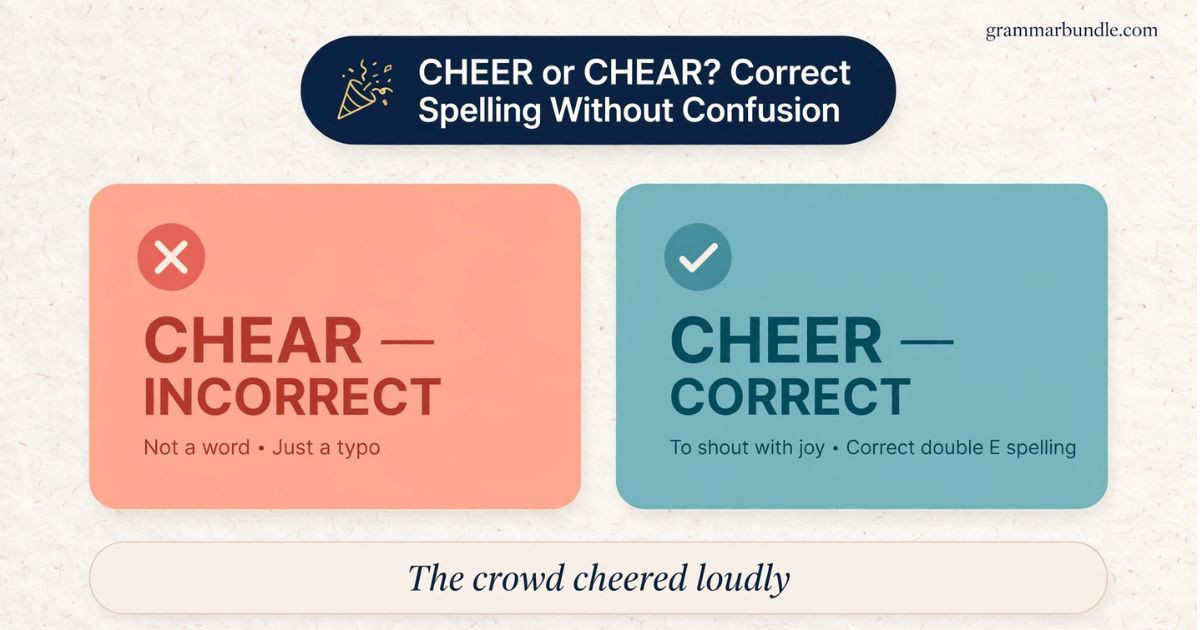
Cheer vs Chear is a common source of confusion for many writers, yet understanding the difference can drastically improve your communication skills. While “cheer” evokes feelings of celebration and joy, “chear” often denotes a different context entirely. Clarifying these terms is essential for proper grammar and for conveying your intended message clearly.
Cheer Vs Chear
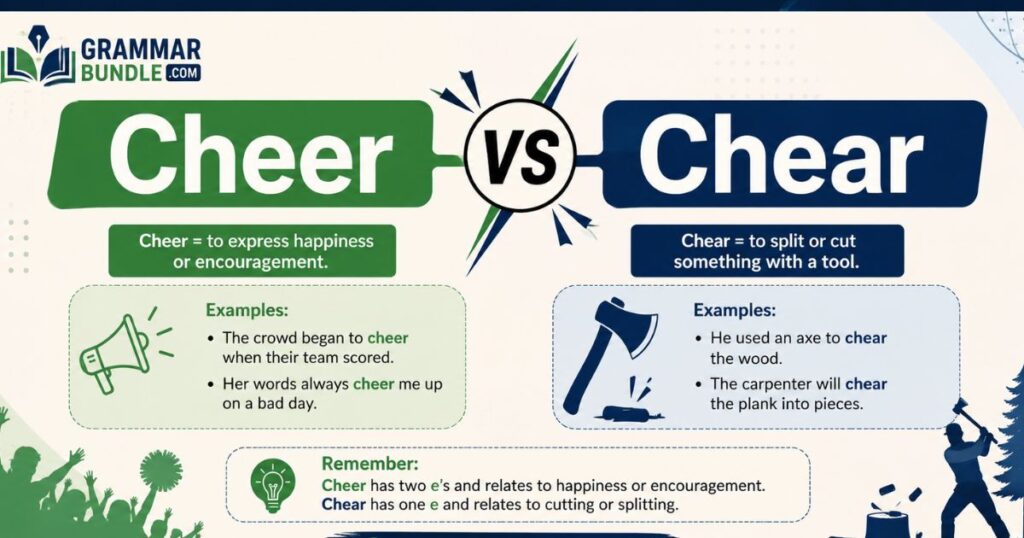
What Does Cheer Mean?
The word “cheer” is connected with happiness, encouragement, support, and approval. It is commonly used when people express positive feelings or support for someone or something.
The spelling “chear” is a common mistake. In standard English, “cheer” is the correct word.

Core Meanings of Cheer
The word “cheer” can express several related ideas:
- Happiness — a feeling of joy or positivity
- Encouragement — showing support to someone
- Approval — expressing positive support for something
Cheer in Different Situations
The word “cheer” can be used in different situations where people express positivity or support.
Cheer at Sporting Events
At sporting events, groups often cheer for their team or favorite player.
Example:
- The crowd cheered for their team.
Holiday Cheer
“Holiday cheer” refers to the happiness and positive feeling associated with holiday celebrations.
Example:
- The decorations brought holiday cheer to everyone.
Cheering Someone Up
To cheer someone up means to help make them feel happier when they are feeling negative or discouraged.
Example:
- Her kind words helped cheer her friend up.
Cheer and Shared Positivity
“Cheer” can also represent a sense of community and shared positivity. A group cheering at a stadium or someone encouraging a friend both show how the word can express support and goodwill.
Overall, “cheer” is a positive and flexible word that can describe happiness, encouragement, support, and approval in everyday situations.
For another useful grammar lesson, see our article on: Tweek vs Tweak: Essential Guide to Correct Usage
Cheer as a Noun and a Verb
Cheer as a Noun
The word “cheer” can be used as a noun to describe happiness, joy, or a shout of support. For example, “a cheer erupted from the crowd” shows the word as an expression of collective excitement or encouragement.
Cheer as a Verb
As a verb, “cheer” describes the action of encouraging or supporting someone. For example, fans may cheer for their team during an exciting match.
For more detailed information, you can also visit this helpful resource. https://thecontentauthority.com/blog/cheer-vs-chear
Cheer in Modern English
In modern English, “cheer” is the standard spelling and is commonly used to express support, happiness, or encouragement.
It can describe both a feeling and an action, depending on how it is used in a sentence.
What About “Chear”?
“Chear” is an archaic spelling found in older literature and historical texts. It was once used with meanings related to comfort and joy, but it is no longer the standard spelling in modern English. Today, “cheer” is the correct form for everyday and formal writing.
Why People Mix Up Cheer and Chear
The confusion between “cheer” and “chear” is mainly caused by similar sounds and English spelling patterns. Both spellings look and sound believable, so it is easy to choose the wrong one, especially when writing quickly.
Sound Overlap
“Cheer” and “chear” sound almost the same, so pronunciation does not always help us identify the correct spelling.
Vowel Patterns
English uses different letter combinations for similar sounds. Patterns such as “ea” and “ee” can make spellings confusing, especially when familiar words seem to follow different rules.
Typing and Visual Familiarity
Fast typing can lead to spelling slips, while “chear” looks familiar enough to seem correct at first glance. These small factors can make the incorrect spelling easy to repeat.
For another useful grammar lesson, see our article on: Noteable or Notable? Easy & Helpful Guide
How to Use Cheer Naturally in Different Situations
The word “cheer” can be used naturally in many situations, from casual conversations to professional and emotional moments. It can express happiness, encouragement, support, or excitement depending on the context.

Everyday and Casual Situations
In everyday conversations, “cheer” can add positivity and warmth. Sharing jokes, happy memories, or encouraging words with friends can create a cheerful atmosphere.
Example:
- “You’ve got this!” can cheer up a friend who is having a difficult day.
Professional Situations
In the workplace, “cheer” can be used to show encouragement and support. A simple positive message can improve morale and create a supportive environment.
Example:
- “Your hard work brought great cheer to the team.”
Emotional Moments
“Cheer” is also useful when someone needs comfort or encouragement. Small words of support can help lift someone’s spirits, especially during difficult times.
Example:
- “Her kind words helped cheer him up after a stressful week.”
Sports and Team Support
Sports are another common context for “cheer.” Fans cheer for their teams, while teammates encourage each other during a match.
Example:
- “The fans cheered loudly for their team.”
Cheer as a Noun and Verb
As a noun, “cheer” can describe happiness, support, or a joyful atmosphere. As a verb, it describes the action of encouraging or supporting someone. This makes “cheer” a flexible word for expressing positivity in different situations.
For another useful grammar lesson, see our article on: Ingage vs Engage Stop Confusing These Two Words Today
Common Mistakes That Slip Through
One common mistake is writing “chear” instead of the correct spelling “cheer.” This can be especially noticeable in formal writing, where accurate spelling helps maintain a professional tone. Also, using “cheer up” repeatedly can make your writing feel less varied, so words like “encourage” or “uplift” can be useful alternatives.
Incorrect and Correct Spelling
Incorrect:
- I want to chear my friend up.
Correct:
- I want to cheer my friend up.
A Simple Memory Trick for Cheer
A helpful way to remember “cheer” is to connect the double “e” with energy and excitement. Think of two energetic cheerleaders standing side by side. This simple image can help you remember that “cheer” has two e’s, not “chear.”
Easy Reminder
- Cheer = double “e” = energy and enthusiasm
This association can make the correct spelling easier to remember in both everyday and formal writing.

Words That Look Similar but Mean Something Else
English has many words that look or sound similar but have completely different meanings. “Cheer” and “chair” are a good example. “Cheer” relates to joy, encouragement, or support, while “chair” refers to a piece of furniture. A small spelling difference can completely change the meaning of a sentence.
Cheer vs Chair
- Cheer: Joy, encouragement, or support
- Chair: A piece of furniture
Cheer vs Cheers
“Cheers” can be used as an informal expression of thanks or as a toast, while “cheer” can refer to joy, support, or the act of encouraging someone.
Cheer Up
The phrase “cheer up” means to make someone feel happier or more positive. It is commonly used in everyday conversations.
For another useful grammar lesson, see our article on: Implicit vs Complicit Clear Differences Explained
Why Correct Word Choice Matters
Using the right spelling and word in the right context is important for clear communication. This is especially true in academic writing, professional emails, blogs, and social media, where unclear wording can affect how your message is understood.
Real-World Example
Incorrect:
- Wishing you joy and chear this season.
Correct:
- Wishing you joy and cheer this season.
The correct spelling keeps the sentence clear and natural, showing how even a small spelling difference can affect the overall quality of your writing.
Punctuation of Word Cheer
Expanding Your Vocabulary Around “Cheer”
Once you understand the meaning of “cheer,” learning related words and expressions can help you use it more naturally. Words such as joy, happiness, and encouragement are closely connected to cheer and can make your vocabulary more varied.
Words Related to Cheer
- Joy
- Happiness
- Encouragement
- Positivity
- Spirit
Common Expressions with Cheer
Some expressions are commonly used in everyday English:
- Cheer up — to make someone feel happier
- Spread cheer — to share happiness or positivity
- Full of cheer — showing a lot of happiness and energy
Using these expressions can make your writing and conversations sound more natural.
Practice Makes It Stick
Practicing “cheer” through simple sentences and exercises can help you remember its meaning and spelling. It can also make the difference between “cheer” and “chear” easier to remember.
For another useful grammar lesson, see our article on: Instalments or Installments? Easy and Correct Spelling Guide
Example Sentence
- Her smile radiated cheer, brightening the café.
Fill in the Blanks
- The crowd began to _ loudly.
- She tried to _ him after the bad news.
Answers:
- cheer
- cheer
Spot the Error
Incorrect:
- They chear for their team every weekend.
Correct:
- They cheer for their team every weekend.
Regular practice can help you use “cheer” confidently while avoiding the common spelling mistake “chear.”
FAQs
- What is the correct spelling: cheer or chear?
Answer: The correct spelling is “cheer.” - Is chear a correct word?
Answer: No, “chear” is not a recognized word in modern English. - Is cheer a noun or verb?
Answer: “Cheer” can be both a noun and a verb, depending on its usage in a sentence. - What does cheer mean?
Answer: “Cheer” means to express joy or support, often through shouts or applause. - What is the difference between cheer and chear?
Answer: “Cheer” is the correct spelling, while “chear” is a misspelling and has no recognized meaning. - Why is cheer spelled with a double e?
Answer: The double “e” in “cheer” emphasizes the long “e” vowel sound in the word. - How do you use cheer in a sentence?
Answer: “The crowd began to cheer when the team scored the winning goal.” - What is the meaning of cheer up?
Answer: “Cheer up” means to become happier or to make someone feel happier.
Conclusion:
Understanding the difference between “cheer” and “chear” is essential for effective communication. While “cheer” embodies concepts of joy and encouragement, “chear” serves a more niche purpose, primarily in terms of informal usage or specific contexts.