
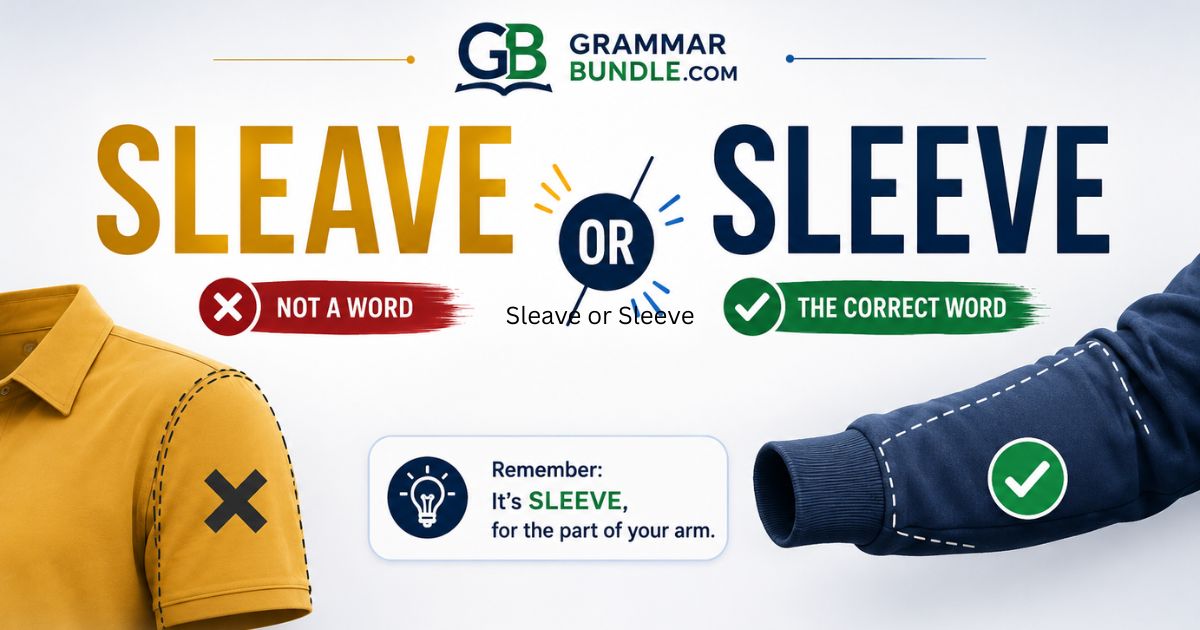
Sleave or Sleeve — two words that sound similar but can lead to significant misunderstandings if used incorrectly. This spelling mix-up may seem minor, but it can impact how your message is perceived. By diving into the nuances of both terms, this article will equip you with the knowledge needed to avoid this common mistake.
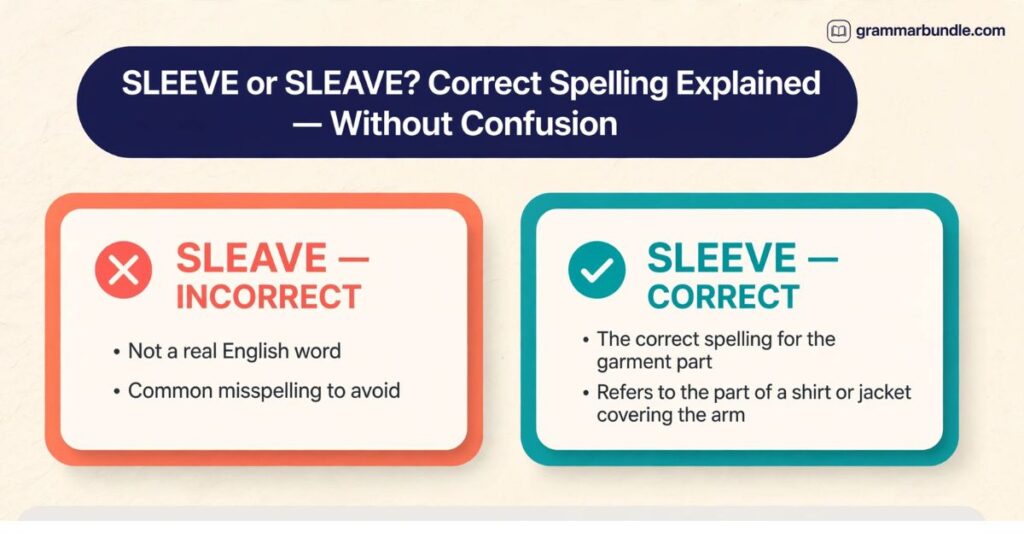
Sleave or Sleeve Correct Spelling Explained Without Confusion
Definition Clarity:
“Sleeve” is the part of a garment that covers the arm. It’s a common word in fashion and tailoring.
“Sleave” is often considered an error or a less common term related to threads or fibers.
Common Usage Tips:
People frequently confuse these words in writing. Remember that “sleeve” is the standard spelling when discussing clothing. If you’re writing about fabric, stick to “sleeve” for clarity.
Mnemonic Aid:
Visualize a shirt with a wide sleeve to help remember the correct spelling. The extra ‘e’ in “sleeve” can remind you of the elegance and structure it adds to clothing.
Understanding these distinctions not only enhances your writing but also ensures clear communication. You’ll impress your readers with your attention to detail!
Sleeve Meaning in English What People Actually Mean
Literal Interpretation:
At its core, “sleeve” refers to the part of a garment covering the arm. It’s a straightforward term, but the real depth comes from its various usages in different contexts.
Metaphorical Use:
When someone says “I have a few tricks up my sleeve,” they imply hidden skills or surprises. This expression brings a sense of intrigue and strategy, suggesting that what’s visible only scratches the surface.
Cultural Associations:
The term also resonates in tattoo culture. “Sleeve tattoos” are large, intricate designs that cover a significant part of the arm. Here, it symbolizes personal expression, storytelling, and sometimes, a badge of honor.
Implication of Concealment:
In casual conversation, mentioning something “up one’s sleeve” can evoke ideas of cleverness or secretive intentions. This usage highlights human nature, revealing the complexities behind what we choose to show and hide.
The Versatility of Sleeves in Real Life
In real life, sleeves appear in many places, adding flair and function to various garments.
- Shirt sleeves come in various lengths, from short to long, catering to different styles and seasons.
- Jacket sleeves not only provide warmth but can also enhance the overall look, turning a simple outfit into something stylish.
- Dress sleeves, whether puffed or fitted, contribute to the garment’s elegance, making it perfect for special occasions.
- Outerwear sleeves protect you from the elements, combining practicality with fashion.
The diversity of sleeves influences how we express our individuality and adapt our wardrobes to the changing world around us. Exploring different styles can inspire creativity and add unique touches to everyday outfits.
You may also find these related topics helpful: Unkept or Unkempt Learn the Correct Word in Seconds
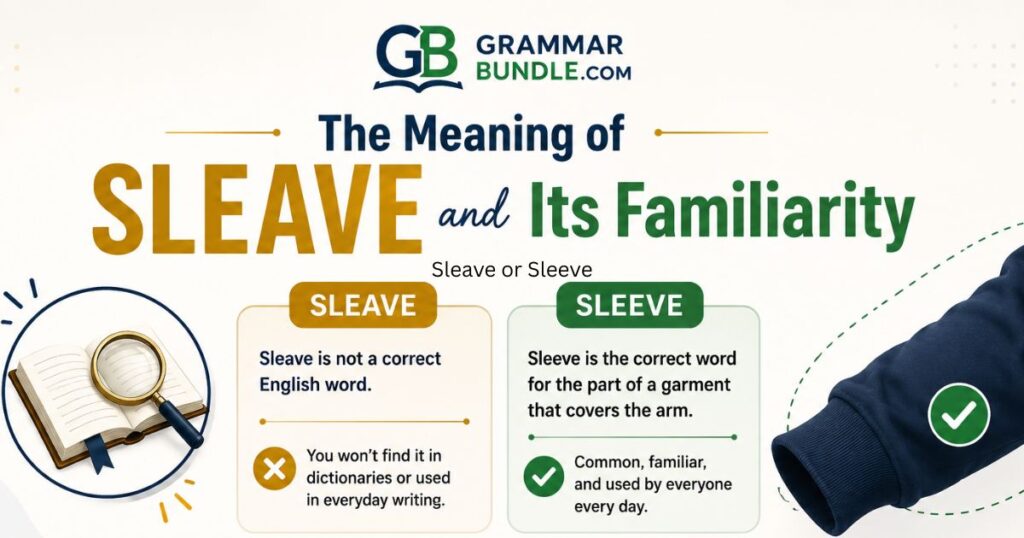
The Meaning of Sleave and Its Familiarity
Definition:
Sleave refers to the fine, often slippery strands of silk or thread.
It once described the way silk was spun and treated, making it a delicate part of textile production.
Historical Context:
The word “sleave” comes from Old English, where it referred to threads or strands, particularly in weaving. This gives it a deep connection to craftsmanship and textile art.
Cultural Resonance:
Sleave” may sound like “sleeve,” invoking images of cozy sweaters and soft shirts but it is not commonly used today. “Sleave” may resonate due to its connection with traditional crafts.
Modern Usage:
In discussions about sustainability and textiles, “sleave” can remind us of the importance of quality craftsmanship in a fast fashion world.
You may also find these related topics helpful: Holistic or Wholistic the Complete Guide
Sleave or Sleeve: The Real Difference
The confusion between “sleeve” and “sleave” often stems from their similar sounds, but their meanings are worlds apart.
Sleave:
- A lesser-known term, mostly used in specialized contexts.
- It describes the thin film of material that surrounds a spinning fiber.
- Primarily relevant in textile industries, where it refers to the process of spinning fibers into yarn.
Sleeve:
- Refers to the part of clothing that covers the arm.
- Found in various garments, from shirts to jackets.
- In real life, sleeves appear in many places: dresses, coats, and even sweaters, creating different styles and functions.
| Feature | Sleeve | Sleave |
|---|---|---|
| Definition | Part of a garment | A textile flat projection |
| Common Use | Everyday clothing | Textile discussions |
| Context | Fashion and apparel | Fabric structures |
| Frequency | Highly used | Rarely used |
| Importance | Essential for design | Niche term |
Understanding these terms can improve communication in various fields. For example, discussing garment design or fabric types benefits from precise language. Misusing these terms might lead to confusion in design specifications or discussions about clothing.
You may also find these related topics helpful: Grimey or Grimy Common Spelling Mistake Explained
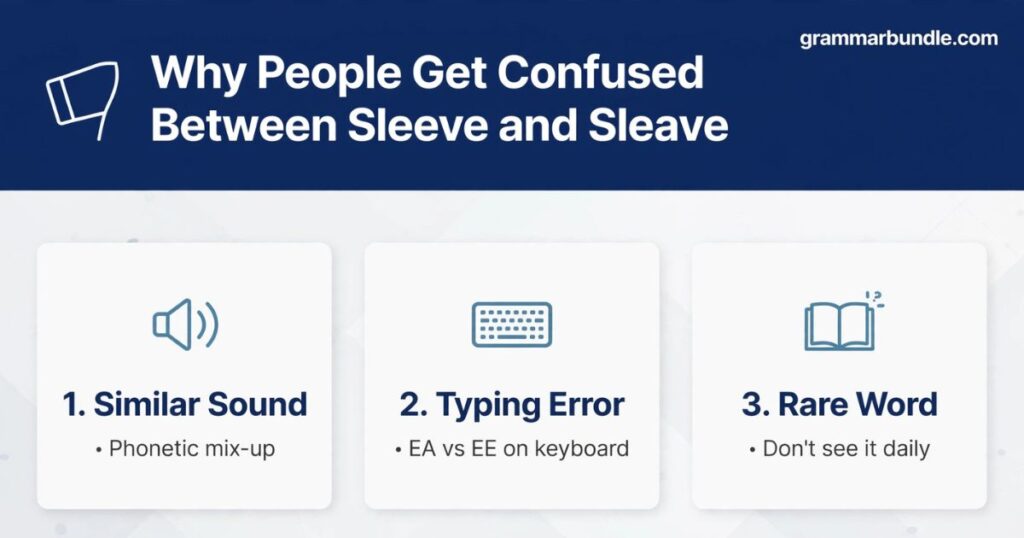
Why People Get Confused Between Sleeve and Sleave
Similar Sound:
Both words rhyme, which can easily lead to mix-ups when spoken or heard in conversation. The phonetic similarity creates a mental overlap.
Letters and Structure:
With only one letter difference, it’s easy to switch them around. This small variation can confuse even careful writers, making one word look like the other.
Contextual Use:
Both terms can appear in similar contexts — clothing and textiles for “sleeve” and often in discussions related to “sleave” in contexts like fiber or sewing. This overlapping field can lead to mistakes in understanding.
Lack of Familiarity:
Many people encounter “sleeve” less frequently in their reading. When faced with a less familiar term, they might instinctively replace it with the more common “sleave.”
Language Evolution:
As language evolves, certain words may fall out of common usage, making them harder to remember. This can lead people to misremember or confuse them with similar-sounding words.
Educational Gaps:
Not everyone learns about word distinctions thoroughly in school. This can result in widespread misunderstandings, especially when students do not grasp the nuances of less common terms.
Understanding the reasons behind this confusion helps in recognizing and correcting such errors, making communication clearer and more effective.
Sleeve Spelling and Grammar Role
From a grammar point of view, “sleeve” is mainly used as a noun. It refers to the part of a shirt, jacket, dress, or other clothing that covers the arm.
The word sleeves is a noun because it names a part of the shirt.
Examples of “sleeve” as a noun
- She rolled up her sleeves before washing the dishes.
- My jacket has a zipper on the sleeve.
- He pulled down his sleeve to cover his arm.
- The shirt has short sleeves.
- Her dress has beautiful lace sleeves.
- One sleeve of my sweater got wet.
- He repaired the torn sleeve of his jacket.
- The child wore a shirt with long sleeves.
Sleeve as a verb
“Sleeve” can also be used as a verb, but this use is much less common. As a verb, it means to put something into a sleeve or protective covering.
Examples:
- The cards were sleeved to protect them.
- She sleeved the documents before storing them.
- The collector sleeved each card carefully.
Quick grammar summary
Sleeve = noun (common) → a part of clothing that covers the arm.
Sleeve = verb (less common) → to put something into a sleeve or covering.
So, in everyday English, when you see “sleeve,” it is most likely being used as a noun.
You may also find these related topics helpful: Sapphire or Saphire Avoid This Common Spelling Mistake
Origin of the Word “Sleeve”
- The term “sleeve” traces its roots back to the Old English word slæf, which means “a covering” or “a container.”
- This connection emphasizes the sleeve’s role as a protective or decorative layer for the arm.
- The evolution of the word has seen it influenced by similar terms in other languages, such as the Latin sleeve, showcasing a rich tapestry of linguistic exchange.
- Historically, sleeves served not just a practical function but also held social significance, varying in style and design across cultures.
- For example, in medieval Europe, the embellishment of sleeves often indicated social status and wealth.
- Today, sleeves continue to evolve, appearing in countless styles from the classic to the avant-garde, reflecting both personal expression and cultural shifts.
- Each variation tells a story of its own, linking us to our past while adapting to modern trends.
Why Sleeve Became the Standard Spelling
The spelling of “sleeve” has solidified its place as the standard representation of this word, and several key factors contribute to this linguistic evolution:
Historical Consistency:
Over centuries of English language development, the spelling “sleeve” emerged as a consistent representation in literary and formal texts, making it the accepted norm.
Phonetic Clarity:
The spelling aligns closely with its phonetic pronunciation, reducing complexities and misunderstandings, which helped solidify its common usage.
Cultural Resonance:
As fashion evolved and the garment became more central in societal trends, “sleeve” gained prominence in fashion dictionaries and literature, reinforcing its standardization.
Influence of Print:
The rise of the printing press in the 15th century helped standardize language. Texts published widely used “sleeve,” cementing its form in the public consciousness.
Digital Communication:
In modern times, with the advent of online communication and social media, the consistent spelling was favored for clarity and professionalism, further entrenching it.
Linguistic Evolution:
Language naturally evolves, and as dialects merged and simplified, “sleeve” became the preferred version, with variations gradually falling out of fashion.
Common Spelling Mistakes with “Sleeve”Common Spelling Mistakes People Make with “Sleeve”
- Sleave: A common mix-up, this version omits the second “l.” It sounds like a simple typo, but it can confuse readers.
- Sleeaf: This phonetic mistake often occurs when people try to spell how they say it. The “a” sound trips many up.
- Sleevee: Adding an extra “e” at the end might feel right, but it changes the word’s meaning. This variant sounds playful but isn’t correct.
- Sleev: Dropping the “e” entirely isn’t just a slip; it can lead to misunderstandings in written communication.
- Sleive: Mixing up vowels is a frequent error. This misstep can make it hard for others to know what you mean.
- Sleev: Some might forget to include the “e” before the “v,” making it hard to recognize the word.
Understanding these common spelling errors provides a chance to improve your writing. By being aware of these mistakes, you can elevate your written communication and avoid confusion.
For more detailed information, explore these helpful external resources :https://word.tips/spelling/sleeve-vs-sleave/
Sleeves in Everyday English Use
- Protective Layer: Sleeves keep our arms warm and safe.
- Fashion Statement: Different styles express personal taste.
- Functional Design: Long sleeves protect from sun and cold.
- Cultural Significance: Sleeves can show status or tradition.
- Comfort Factor: Loose sleeves allow freedom to move.
- Adaptability: Roll them up for a casual look or keep them down for formal occasions.
- Emotional Connection: A beloved sweater with special sleeves holds memories.
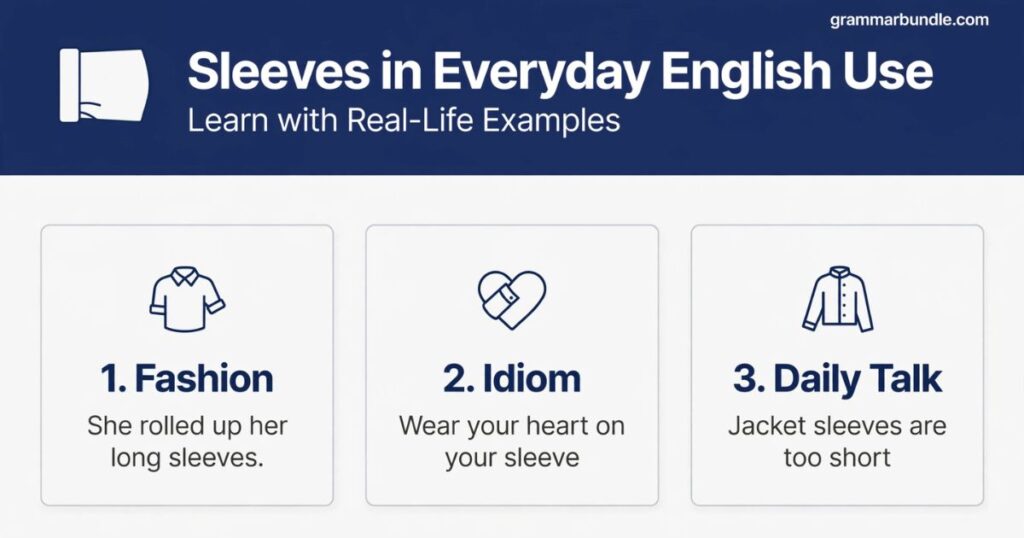
Engaging Examples
- Layering: Pairing a sleeveless top with a cozy cardigan adds style and warmth.
- Art of Tailoring: Well-fitted sleeves can elevate any outfit.
- Seasonal Trends: Flowy sleeves in summer and snug fits in winter make fashion versatile.
Everyday Conversations
- Colloquial Phrases: “I’m just rolling up my sleeves for work today!”
- Expressions: “Let’s take a leaf out of her sleeve and be bold.”
- Relatable Imagery: Think of sleeves as both a protective shield and a canvas for your unique style.
You may also find these related topics helpful: Scarey or Scary :The Correct Spelling
Understanding “Sleave” in Today’s Language
Definition Dilemma:
“Sleave,” often mistaken as a misspelling of “sleeve,” previously meant something entirely different. It referred to the act of unwinding or unraveling.
Modern Usage:
Today, “sleave” holds little relevance in everyday conversation. The rise of digital communication emphasizes clear and accurate language, often leaving outdated words behind.
Evolving Language:
Language changes. New generations reshape how we communicate. While some words fade, others are born. “Sleave” may not fit today’s context, but it teaches us about the fluid nature of language.
Reflecting on Relevance
- Cultural Impact: Sometimes, lesser-known words find new life in poetry or literature. They evoke a sense of nostalgia and encourage exploration of their origins.
- The Power of Choice: Choosing between “sleave” and “sleeve” highlights our connection to language. Embracing modern terms helps keep discussions relatable, fresh, and engaging.
- Appreciating the Past: Even if “sleave” seems obsolete, remembering it enriches our understanding of linguistic history. Words reflect society’s evolution.
You may also find these related topics helpful: Wack or Whack The Real Difference and Correct Spelling
FAQs
- What’s the difference between “sleave” and “sleeve”?
Ans:“Sleave” is rarely used and often confused with “sleeve,” which refers to the part of a garment that covers the arm. - How do I remember the spelling of “sleeve”?
Ans:Think of a shirt sleeve that has two E’s in it. Just like “shirt,” they both have the letter E! - Are there other meanings for “sleave”?
Ans:“Sleave” can refer to a bundle of threads or fibers, but it’s not commonly used. Stick with “sleeve” for clothing. - Why do people confuse “sleave” and “sleeve”?
Ans:They sound similar when spoken and are visually close, making it easy to mix them up. - Can “sleeve” be used in different contexts?
Ans:Absolutely! “Sleeve” can refer to clothing, a cover for records, or even a protective covering for other items. - How can I avoid making this spelling mistake?
Ans:Just remember: if it’s about clothing, it’s always “sleeve”! You could also keep a quick note handy to remind you. - Is there a trick for spelling “sleeve” correctly?
Ans:Yes! Think of it this way: “sleeve” has two E’s — the same number of arms in a short-sleeved shirt! - Where can I learn more about spelling?
Ans:There are many online resources, like spelling websites or educational apps, that can help improve your spelling skills!
Conclusion:
Sleave or sleeve? Understanding the difference between these two spellings is essential for clear communication. While “sleeve” refers to a part of clothing, “sleave” is a lesser-known term related to fiber. Knowing how to use these words correctly helps avoid confusion in your writing.