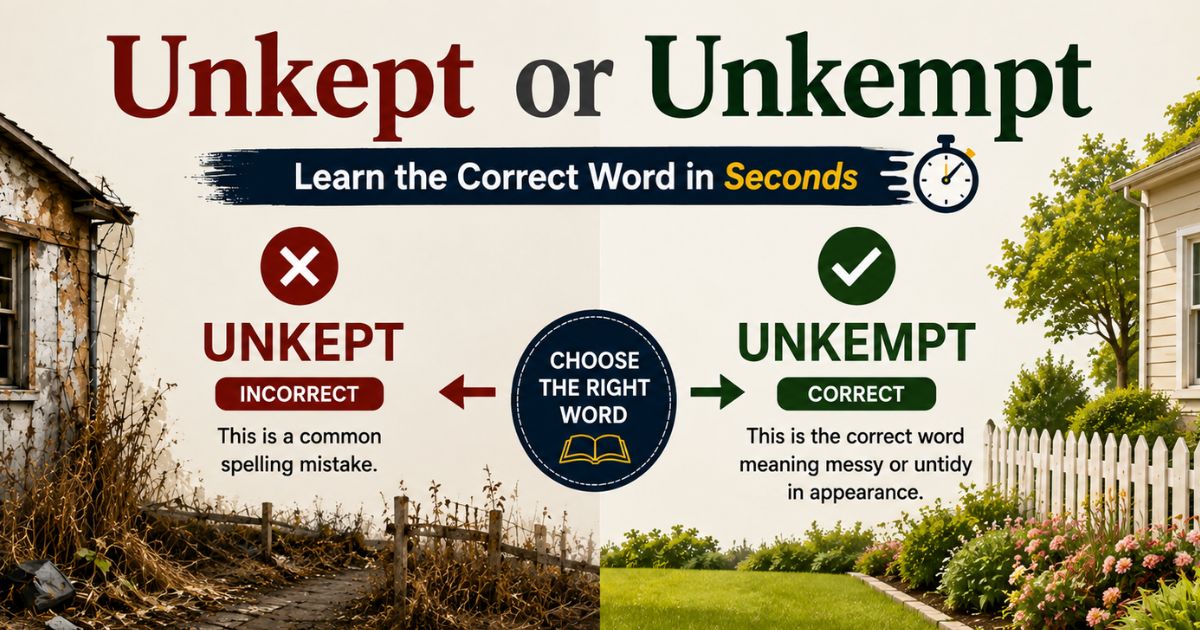
The words “unkept” and “unkempt” are often confused in English, but they have different meanings and uses. This guide explains their definitions, differences, and correct usage with simple examples. Understanding these words will help you use them accurately and improve the clarity of your writing.
Unkept or Unkempt Quick Answer
“Unkempt” and “unkept” are often confused. “Unkempt” is the standard word used to describe a messy, untidy, or poorly groomed appearance.
Example:
- After the long hike, his hair looked unkempt.
“Unkept” is used much less often and is not the preferred choice in formal writing.
Unkempt Meaning and Unkept Meaning Explained Clearly
Unkempt Meaning
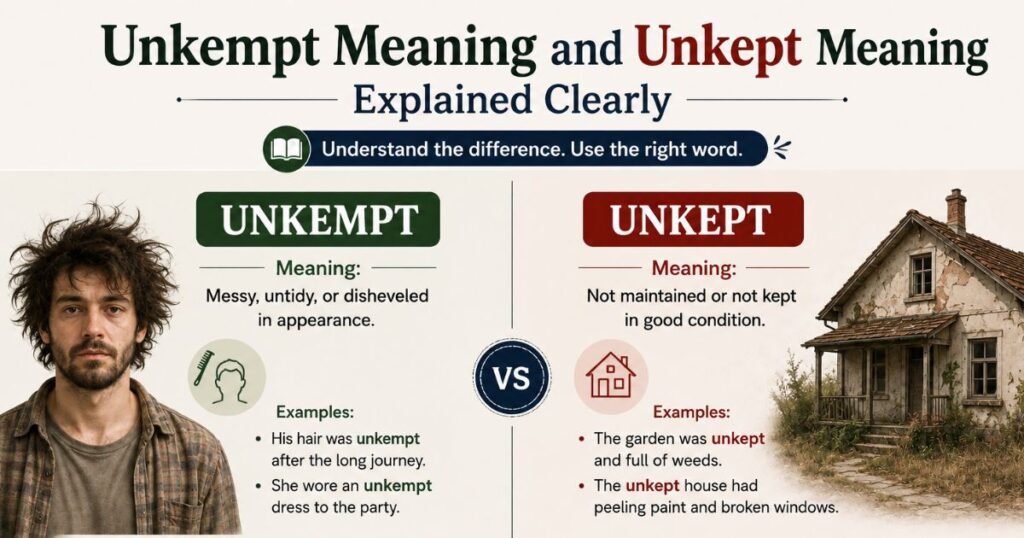
“Unkempt” describes something that looks messy, untidy, or neglected, especially when talking about grooming or appearance.
It can describe:
- Messy hair
- Untidy appearance
- Lack of cleanliness
- Poorly maintained condition
Example:
- After the long hike, his hair looked unkempt.
Unkempt Definition
Unkempt means messy, untidy, or not properly cared for, especially in appearance or grooming.
Unkept Meaning
“Unkept” is rare and is not the preferred word when describing someone’s appearance. It may sometimes be used for something that has not been maintained or cared for.
Example:
- The unkept garden was overgrown.
Unkept Definition
Unkept can imply something that has not been maintained or cared for, such as a property or garden. However, it is less commonly used than “unkempt.”
Is It Unkept or Unkempt?
When describing grooming, cleanliness, or appearance, use “unkempt.”
Simple rule:
- Appearance or grooming → Unkempt
This distinction helps you choose the correct word and keep your writing clear and accurate.
Related Articles You May Find Helpful https://grammarbundle.com/comming-vs-coming/
Why People Confuse Unkept and Unkempt
The confusion between “unkept” and “unkempt” often comes from their similar sounds and the connection between “keep” and “kept.” Since “keep” changes to “kept,” people may assume that “unkept” is also correct.
Another reason is the word “kempt,” which means tidy or well-groomed. In contrast, “unkempt” describes something messy, untidy, or not well cared for.
Typing mistakes, autocorrect, and simple memory errors can also lead people to use “unkept” instead of “unkempt.”
Origin of Unkempt
The word “unkempt” is connected to the Old English word “cemban,” meaning “to comb.” The word “kempt” refers to being neat or well-groomed, while “unkempt” describes the opposite—someone or something that appears uncombed, disheveled, or poorly maintained.
Understanding this connection between “kempt” and “unkempt” makes the word easier to remember and helps explain its connection with grooming and appearance.
Kempt vs Kept Explained
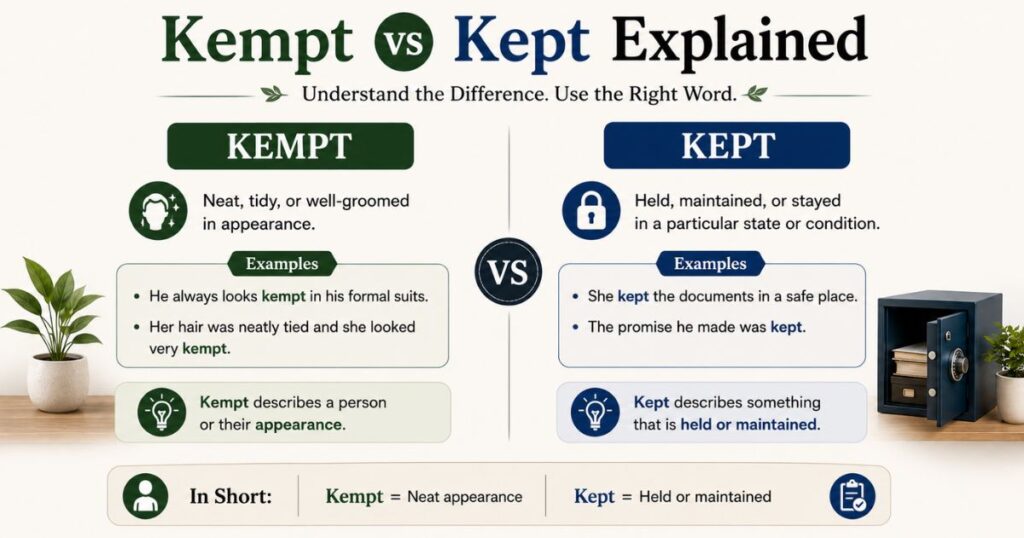
“Kempt” and “kept” have different meanings.
Kempt:
An old adjective meaning neat or well-groomed.
Kept:
The past tense of “keep,” referring to possession or maintenance.
Unkempt:
Describes a neglected or untidy appearance.
Unkept:
Suggests something that has remained neglected but is used less often.
Understanding these differences can help avoid common English word confusion.
Related Articles You May Find Helpful https://grammarbundle.com/loot-vs-lute/
British English vs American English
In both British and American English, “unkempt” keeps the same spelling. However, regional usage may show some differences in how these words are used.
Understanding these distinctions can improve your word choice and make your writing clearer.
How to Use Unkempt in a Sentence
The word “unkempt” describes a messy or neglected appearance. It can be used for hair, houses, gardens, or other places that look untidy or poorly maintained.
Examples:
- Her unkempt hair gave her a carefree appearance.
- The unkempt garden looked very different from the neat lawns nearby.
- The house looked unkempt and neglected.
- His unkempt appearance suggested a lack of care.
These examples show how “unkempt” can describe disorder, neglect, or a lack of maintenance.
Common Mistakes with Unkept or Unkempt
A common mistake is using “unkept” instead of “unkempt.” These words can be confusing because “kept” is associated with something that is maintained or cared for.
A simple way to remember the difference is:
- Kept = maintained
- Unkempt = messy or not well-maintained
Using “unkempt” correctly makes your writing clearer and helps you describe neglected or untidy conditions accurately.
Related Articles You May Find Helpfulhttps://grammarbundle.com/uninclined-vs-disinclined/
Quick Comparison Table
The words “unkempt” and “unkept” are often confused, but they have different uses. “Unkempt” is the standard adjective used to describe a messy, untidy, or poorly maintained appearance. “Unkept” is rarely used and does not carry the same sense of disarray.
| Feature | Unkempt | Unkept |
| Correct spelling | Yes | Rarely accepted |
| Grammar status | Standard adjective | Rare usage |
| Meaning | Messy, untidy, or poorly maintained | Simply not kept |
| Usage in writing | Preferred choice | Not recommended |
| Formal acceptance | Yes | Generally avoided |
Appearance and Meaning Clusters
An unkempt appearance can describe scruffy hair, untidy clothing, or a generally neglected look. Such an appearance may affect first impressions, especially in professional settings where people often value neatness and attention to detail.
The word “unkempt” conveys a sense of disorder and lack of maintenance. It can also be useful in academic and professional writing when describing something that looks messy or poorly organized.
Real-Life Usage Insight
In professional and academic contexts, “unkempt” clearly communicates a lack of neatness or maintenance. It is useful when discussing appearance, organization, or presentation without being overly harsh.
Related Articles You May Find Helpful https://engglory.com/
Why Unkempt Is the Safer Choice
“Unkempt” is the preferred word when describing something messy, untidy, or poorly maintained. It provides a clear meaning and works well in both everyday and formal writing.
Simple Memory Trick
A simple way to remember “unkempt” is to think of something that needs a comb.
- Unkempt = uncombed
If something looks as though it has not been combed or properly maintained, “unkempt” is the right word.
Related Articles You May Find Helpful https://grammarbundle.com/noteable-or-notable/
FAQs
FAQs about Unkempt vs. Unkept
- Is “unkempt” correct?
Ans: No, the correct term is “unkempt,” meaning messy or untidy. “Unkept” is incorrect in this context.
2. Is “unkept” a word?
Ans: Yes, “unkept” is a word, but it typically refers to something that has not been maintained or preserved.
3. What is the meaning of “unkempt”?
Ans: “Unkempt” describes a person or appearance that is untidy or messy, often referring to hair or clothing.
4. What is the definition of “unkempt”?
Ans: The definition of “unkempt” is lacking in order or neatness; disorderly or disheveled.
5. What does “unkept” mean?
Ans: “Unkept” refers to something that has not been cared for or maintained, often used in the context of property or relationships.
6. What’s the difference between “kempt” and “unkempt”?
Ans: “Kempt” means well-groomed or tidy, while “unkempt” is its opposite, indicating a lack of grooming or disorder.
7. How do I use “unkempt” in a sentence?
Ans: You could say, “His unkempt appearance suggested he had not prepared for the meeting.”
8. Is “unkempt” appropriate in formal writing?
Ans: Yes, “unkempt” is appropriate for formal writing when describing someone or something that is disordered or not well-groomed.
Related Articles You May Find Helpful https://grammarbundle.com/holistic-or-wholistic/
Conclusion
Understanding the difference between “unkempt” and “unkept” helps improve clarity and accuracy in your writing. “Unkempt” correctly describes a messy, untidy, or poorly maintained appearance, while “unkept” is often used incorrectly. Remember to associate “unkempt” with untidiness and use the correct term when describing a disordered appearance. Using the right word will make your writing clearer, more precise, and more professional.